
Furnished apartments make more sense for stays under a year; unfurnished units win once you’re settling in for the long haul. The tie-breaker isn’t taste, it’s math: how many months does it take for buying your own furniture to actually save you money? Run that break-even number before you sign anything.
TL;DR:
- Furnished units typically cost 15% to 30% more than unfurnished ones, covering furniture depreciation, higher turnover, and rental convenience.
- Calculating the break-even point involves adding furniture and move costs, subtracting resale value, then dividing by the monthly premium to decide if renting furnished makes financial sense.
- For stays under six to eight months, renting furnished is usually more economical, while longer-term tenants generally save money with unfurnished units once setup costs are considered.
- Renters should verify exactly what furnishings, utilities, and services are included in the lease, and request written inventories to avoid misunderstandings.
- Landlords benefit from higher rent premiums and frequent short-term tenants, but face higher furnishing costs, more turnover, and the need for detailed inventory management.
Table of Contents
- Furnished vs Unfurnished Rental: What Each Term Actually Means
- How Much More Does a Furnished Rental Cost?
- Is a Furnished Apartment Worth It for Renters?
- What Landlords Gain and Lose With Furnished Units
- Your Pre-Lease Checklist: Furnished or Unfurnished
- How Phoenix Furnished Rentals Handles the Common Pain Points
- Matching the Lease to the Life Stage, Not the Trend
- Ready to Book a Furnished Stay in Phoenix?
- Sources
Furnished vs Unfurnished Rental: What Each Term Actually Means
“Furnished” isn’t a fixed standard, and that’s exactly why so many renters get burned by assumptions. A landlord advertising a “furnished” unit might mean a mattress and a couch. Another might mean linens, cookware, Wi-Fi, and utilities bundled in. Listings vary widely enough that the word alone tells you almost nothing.
Here’s the rough breakdown by category:
- Unfurnished: In most U.S. markets, this means major appliances only (stove, fridge, sometimes a washer/dryer) and nothing else. Bring your own bed, table, and sofa.
- Semi-furnished: Usually appliances plus a few big-ticket items like a bed frame or sofa, but rarely a full setup.
- Fully furnished: Bed, sofa, table, major appliances, plus extras that can include linens, kitchenware, Wi-Fi, and utilities.
Before you sign, ask the landlord for a written, itemized inventory. Request it cover: every piece of furniture by room, appliance brand and condition, what utilities (if any) are included, and whether Wi-Fi and cleaning are part of the deal. Get it in writing, not a verbal promise during the tour.
How Much More Does a Furnished Rental Cost?
Furnished units typically rent for 15% to 30% more than the same unit unfurnished. That range swings based on how “fully” furnished the place is, whether utilities and cleaning are bundled, and how competitive the local short-term rental market happens to be.
The 15 to 30 percent question: That premium isn’t padding. It covers depreciation on furniture the landlord bought, higher turnover costs, and the convenience you’re paying to skip. Whether it’s worth it depends entirely on how long you’ll be there.
Going unfurnished means covering your own setup costs upfront, and they add up faster than people expect:
- Furniture — bed, sofa, table, dresser, basics for a one-bedroom often run $2,000 to $5,000 depending on quality and whether you buy new.
- Delivery and assembly — budget $150 to $400 if you’re not doing it all yourself.
- Moving truck or movers — $100 to $1,500 depending on distance and whether you hire help.
- Small household goods — cookware, curtains, lamps, cleaning supplies, easily another $300 to $800.
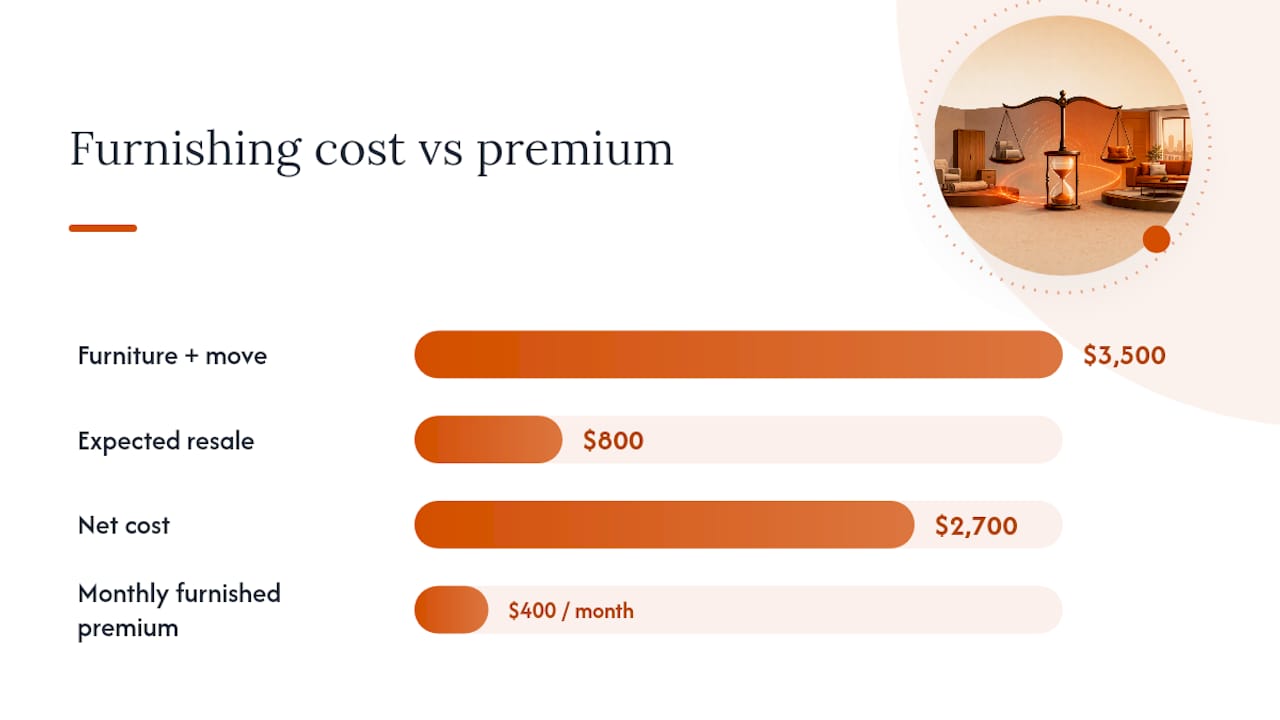
Here’s the break-even formula that actually matters: (furniture costs + move costs − expected resale value) ÷ monthly furnished premium = break-even months.
Say your furniture and move costs total $3,500, and you figure you could resell the furniture for $800 when you leave. That’s $2,700 in net cost. If the furnished unit down the street costs $400 more per month, your break-even point is $2,700 ÷ $400, which comes out to roughly 6.75 months. Stay less than that, furnished wins. Stay longer, unfurnished starts paying for itself.
Don’t stop the math at rent, either. Furnished units sometimes carry higher security deposits or separate cleaning fees, and state law can cap deposits differently depending on whether utilities are bundled into the lease. Check the fine print before you compare two listings side by side.
Is a Furnished Apartment Worth It for Renters?
For a lot of renters, the appeal of furnished housing isn’t the furniture. It’s not having to think about furniture at all.
What you gain:
- Move in with suitcases, not a truck.
- Utilities, Wi-Fi, and sometimes cleaning are often bundled into one bill.
- No disposal headache when the lease ends. No craigslist listing for a couch nobody wants.
- Flexibility to relocate without dragging furniture across state lines.
What it costs you:
- Higher monthly rent, sometimes significantly.
- Less control over style. You live with someone else’s taste in decor.
- Furniture quality varies wildly. Some landlords furnish with care; others grab the cheapest set that fits.
Pro Tip: If personalization matters to you, ask whether you can swap out or supplement furniture (bring your own lamp, hang your own art) before signing. Some landlords are flexible about this even in fully furnished units.
Travel nurses on 13-week contracts, corporate transferees on relocation packages, and anyone doing a short stint in a new city almost always come out ahead going furnished. Renters settling in for a year or more, especially those who already own furniture or want to build a home that feels like theirs, usually prefer unfurnished.
What Landlords Gain and Lose With Furnished Units
Furnished rentals let owners charge more and reach a different renter entirely. Mid-term furnished rentals tend to attract reliable segments like travel nurses and corporate transferees who value convenience and predictable monthly billing. Unfurnished units, by contrast, tend to land longer leases and less turnover.
The tradeoffs run both directions:
- Revenue upside: 15% to 30% rent premiums, access to relocation and corporate housing markets that skip unfurnished listings entirely.
- Upfront cost: Furnishing a one-bedroom well can run several thousand dollars before the first tenant moves in.
- Turnover and wear: Furnished units see more turnover since they attract shorter, more transient stays, which means more wear on furniture and more frequent replacement.
- Tax treatment: Furniture and appliance purchases, plus related maintenance, may be deductible, but the specifics depend on your accounting method. Talk to a CPA before assuming anything.
On the operational side, protect yourself the same way you’d want a tenant to protect themselves: keep a detailed inventory list with photos of every item’s condition, attach it as a lease addendum, and confirm your landlord insurance policy actually covers furnished contents, not just the structure. Standard rental insurance doesn’t always extend to furniture you own and lease out.
Your Pre-Lease Checklist: Furnished or Unfurnished
Before you sign anything, work through this in order:
- Estimate your stay length honestly. Six months? Eighteen? This one number drives almost everything else.
- Run the break-even math using your own furniture and move cost estimates against the furnished premium quoted.
- Request the itemized inventory in writing, and don’t accept a verbal rundown during the walkthrough.
- Confirm what’s actually included — utilities, Wi-Fi, cleaning frequency, and whether those are locked in for the lease term or subject to change.
- Verify the deposit amount against your state’s legal limits, since furnished units sometimes carry higher deposits than unfurnished ones.
- Ask about the pet policy separately, since furnished units with soft furniture often have stricter rules or added pet fees.
Questions worth asking directly: “Can you send me a written inventory with brand and condition notes?” and “Are utilities included in the quoted rent, or billed separately?” A landlord who hedges on either question, or won’t put the inventory in writing, is a red flag. Walk away rather than sign on a verbal promise you can’t reference later if something breaks or goes missing.
How Phoenix Furnished Rentals Handles the Common Pain Points
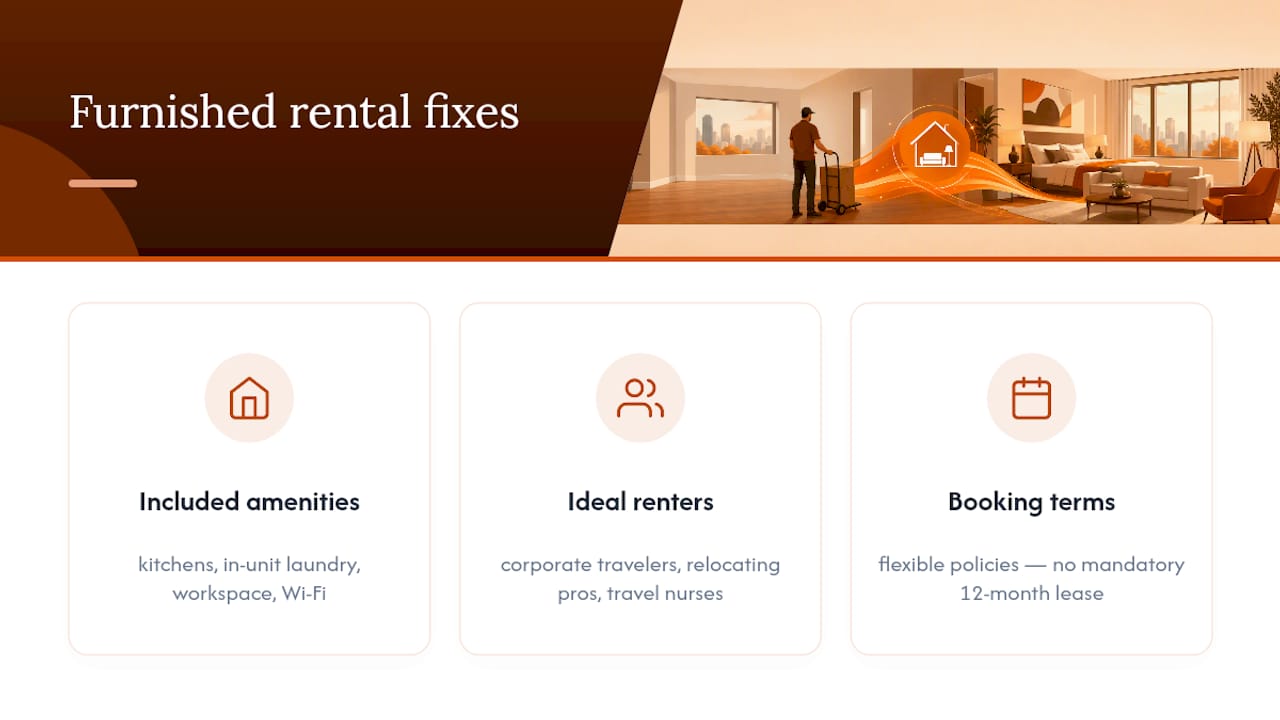
Most of the friction in furnished renting comes from vague listings and inventories nobody wrote down. Phoenixfurnishedrentals builds around that gap. Every unit, from studio lofts to larger suites, comes with fully equipped kitchens, in-unit laundry, dedicated workspace, and Wi-Fi already sorted, so there’s no ambiguity about what “furnished” means before you book.
The stays are built for exactly the renters who benefit most from going furnished in the first place: corporate travelers, relocating professionals, and travel nurses on mid-term assignments. Flexible booking policies mean you’re not locked into a standard twelve-month lease just to get a place with real furniture in it.
If you’re evaluating a listing anywhere, including one of ours, run it through the checklist above: ask for the itemized inventory, confirm what’s bundled, and calculate your own break-even number before you commit.
Matching the Lease to the Life Stage, Not the Trend
Furnished rentals get treated like a lifestyle statement online, and that’s backwards. The right call has almost nothing to do with taste and everything to do with how long you’ll actually be there. Someone on a three-month work assignment loses money furnishing an apartment from scratch. Someone putting down roots for two years loses money paying a furnished premium the whole time. Run the break-even math honestly, factor in your own tolerance for hauling furniture across state lines, and let that number make the call instead of a gut feeling.
— Sean
Ready to Book a Furnished Stay in Phoenix?
If the break-even math points you toward furnished, Phoenix Furnished Rentals is built exactly for that window: corporate housing, relocation stays, travel nurse contracts, and anything in the few-weeks-to-several-months range where buying furniture never made sense to begin with. Every listing, whether it’s the Desert Sky Loft or the Scottsdale Gateway Suite, comes fully equipped with kitchens, laundry, and workspace ready on day one.
Before you book, apply the same checklist you’d use anywhere: confirm the itemized inventory, check what’s bundled into the rate, and verify the lease terms match your actual stay length. Browse available properties and check dates directly on the Phoenix Furnished Rentals site to see what fits your timeline.
Sources
- Furnished vs. Unfurnished Apartments: Cost and trade-offs
- Furnished vs. Unfurnished: Which Should You Rent?
- Furnished vs Unfurnished Apartments: Cost Guide
- Furnished vs. Unfurnished Rental: Pros and Cons for Landlords