
A furnished apartment is a rental that supplies the major furniture and basic housewares needed to move in and live comfortably, without buying a couch or a dinner plate first. That’s the plain-English core of it, and it lines up with how Cambridge Dictionary defines “furnished”: provided with furniture. What varies wildly is the fine print. This guide breaks down exactly what to expect room by room, and gives you a checklist to confirm before you sign anything.
TL;DR:
- Furnished apartments usually include essential furniture such as beds, sofas, and major kitchen appliances, but may not always provide linens, cookware, or utilities.
- The difference between semi-furnished, furnished, and fully furnished mainly lies in the completeness of the inventory, with fully furnished units often including Wi-Fi and utility bundles.
- A furnished apartment typically costs 15% to 30% more monthly than an unfurnished one, making it more cost-effective for stays shorter than a year.
- An itemized inventory and photographic documentation before move-in are crucial to avoid deposit disputes and verify exactly what is included.
- Furnished living benefits short-term movers like traveling professionals but may be less suitable and more expensive for long-term residents who want full customization.
Table of Contents
- What Does Furnished Apartment Mean, Room by Room?
- Furnished Vs Unfurnished Vs Fully Furnished: Decoding the Labels
- Furnished Vs Unfurnished Apartments: Which One Actually Fits You?
- The Real Cost of Furnished Living: A 15 to 30 Percent Premium
- Your Move-In Checklist for a Furnished Unit
- Where to Actually Find Furnished Apartments
- Making a Furnished Rental Feel Like Yours (Without Losing Your Deposit)
- How Professional Providers List Furnished Inventory
- What Renters Get Wrong About “Furnished”
- Sources
- FAQ
What Does Furnished Apartment Mean, Room by Room?
The furnished apartment definition sounds simple until you’re standing in a unit wondering whether that IKEA lamp is actually included or if the previous tenant just forgot it. Here’s what tends to show up in each room, and where the gaps usually are.
Living room. A sofa, coffee table, one or two lamps, and side tables are close to universal. A TV is common but not guaranteed. Some listings include a media console or bookshelf; plenty don’t bother.
Bedroom. Expect a bed frame, a mattress, a dresser, and a nightstand at minimum. Linens (sheets, pillows, comforters) are the swing item. Plenty of “furnished” listings hand you a bed and nothing to put on it, so ask directly.
Kitchen. Major appliances, meaning the refrigerator, stove, and dishwasher, come with almost every unit, furnished or not, since they’re usually built in. What separates a merely furnished kitchen from a fully stocked one is the small stuff: pots, pans, dishes, silverware, and a coffee maker. Some providers stock a full kitchen kit; others leave you buying a frying pan on day one.
Bathroom and laundry. Landlords typically supply a shower curtain rod and maybe a mirror, but towels, bath mats, and toiletries are almost always on the tenant. In-unit laundry, when it exists, comes with the washer and dryer as fixed equipment. Detergent and hampers are your job.
Extras that separate “furnished” from “fully furnished.” This is where the label gets murky. Linens, cookware, Wi-Fi, and utilities bundled into the rent all point toward a more complete, move-in-ready setup. A listing that includes all of that is often marketed as “turnkey” rather than just “furnished,” and the distinction is worth pinning down before you commit.
Here’s a quick scan of what’s typically included versus what’s a toss-up:
- Almost always included: sofa, bed frame, mattress, dresser, major kitchen appliances, washer/dryer if in-unit
- Frequently included: coffee table, lamps, nightstand, TV, basic cookware
- Often a toss-up: linens, towels, small kitchen appliances, Wi-Fi, utilities
- Rarely included: toiletries, cleaning supplies, decor, personal electronics
Furnished Vs Unfurnished Vs Fully Furnished: Decoding the Labels
Listings throw around three or four different terms as if they mean the same thing, and they don’t. There’s no binding industry standard defining any of them, so ApartmentGuide advises checking the lease and inventory list every single time rather than trusting the label alone.
- Semi-furnished usually means the big-ticket items only, a bed and maybe a sofa, with everything else left to you. Confirm exactly which pieces are included, since “semi” can mean almost anything.
- Furnished generally covers the core furniture in every room, but often skips linens, cookware, and small appliances. This is the tier where surprises happen most.
- Fully furnished or turnkey means you could show up with a suitcase and start living: furniture, linens, kitchenware, and often Wi-Fi and utilities bundled in.
Whichever tier you’re looking at, request a written, itemized inventory before you sign. A verbal promise that “it’s furnished” protects nobody once you’re standing in an empty kitchen.
Furnished Vs Unfurnished Apartments: Which One Actually Fits You?
The honest answer depends almost entirely on how long you’re staying and how much moving hassle you’re willing to absorb. Furnished units cost more per month, but they eliminate the upfront expense and logistics of buying a bed, a couch, and kitchen gear you might toss in six months anyway.
Furnished pros: move in with a suitcase, skip the furniture-buying spree, avoid the cost and stress of a moving truck full of stuff you’ll just sell later.
Furnished cons: higher monthly rent, less personal style, and you’re often living with someone else’s decor choices.
Unfurnished pros: you build a space that’s actually yours, and over a multi-year lease the math usually favors owning your own furniture instead of renting access to someone else’s.
Unfurnished cons: upfront costs for furniture and setup, plus the physical work of moving it all in and eventually out.
Industry observers point to a mobile workforce as the reason furnished demand has grown: it removes the logistical weight of moving, large purchases, and utility setup for people who relocate often. That’s exactly who tends to benefit most from furnished:
- Traveling nurses and healthcare contractors on 8 to 26 week assignments
- Relocating professionals bridging the gap between old and new permanent housing
- Corporate travelers on extended project work
- Anyone between homes after a sale, a renovation, or a life change
If you’re planting roots for years, not months, unfurnished usually wins on cost and lets you actually make the place feel like yours.
The Real Cost of Furnished Living: A 15 to 30 Percent Premium
Furnished apartments typically rent for 15% to 30% more per month than a comparable unfurnished unit, and that premium is where a lot of people either win or lose the math.
The break-even logic is straightforward: add up what furniture, a moving truck, setup fees, and utility activation would cost you upfront for an unfurnished place. Compare that total against the extra rent you’d pay each month for furnished. Once the extra rent you’ve paid catches up to what you would have spent buying and moving your own furniture, unfurnished starts winning.
A few rough scenarios show how this plays out:
- 3-month stay: Furnished wins easily. You’d never recoup furniture and moving costs in 12 weeks.
- 6-month stay: Furnished still usually makes sense, especially once you factor in the time and stress of buying and later reselling furniture.
- 18-month stay: This is where unfurnished often pulls ahead, assuming you can amortize furniture costs over a longer runway and plan to keep the pieces afterward.
That range roughly matches the guidance that furnished units are most cost-efficient for stays between one and twelve months. Beyond that, unfurnished tends to close the gap. Bundled utilities and flexible lease terms can also justify part of that premium for travelers who value speed and predictability over saving a few hundred dollars a month.
Your Move-In Checklist for a Furnished Unit
Before you sign a lease on any furnished apartment, work through this list in order.
- Request an itemized inventory attached directly to the lease, not a verbal list or a vague listing description.
- Photograph and date every item and fixture the day you move in, including furniture condition, appliance functionality, and any existing damage.
- Get landlord sign-off on that documentation so there’s a shared, agreed record if a dispute comes up later.
- Clarify repair and replacement responsibility in writing: who fixes a broken lamp, who replaces a stained mattress, and how that affects your deposit.
- Confirm what’s bundled into rent — utilities, internet, and cleaning services vary by provider, and unclear billing is a common source of move-in surprises.
- Buy renter’s insurance. Landlord policies cover the building and the landlord’s own furniture, but they don’t cover your personal belongings, so a laptop or jewelry left in a furnished unit isn’t protected without your own policy.
Detailed move-in documentation, timestamped photos, serial numbers for electronics where possible, and a signed inventory copy, meaningfully reduces deposit disputes when you move out months later and memories of “how it was” get fuzzy.
Where to Actually Find Furnished Apartments
Supply for furnished apartments splits across a few distinct channels, and each one handles terms and transparency differently.
- Corporate and managed housing providers cater to relocating employees and traveling professionals, usually with clear lease terms and detailed property listings. Corporate housing options in Phoenix tend to offer more flexibility on lease length than a standard apartment complex.
- Local furnished-rental managers often provide more personalized service and unique properties than a corporate chain, though quality and transparency vary by operator.
- Short-term rental platforms are built for stays under a month and typically bundle everything, but nightly rates climb fast for longer stays.
- Traditional rental marketplaces, including sites like HomeRent, list furnished units alongside unfurnished ones, so filtering carefully matters.
Whichever channel you use, insist on an inventory, read recent reviews, and confirm move-in condition before you hand over a deposit.
Making a Furnished Rental Feel Like Yours (Without Losing Your Deposit)
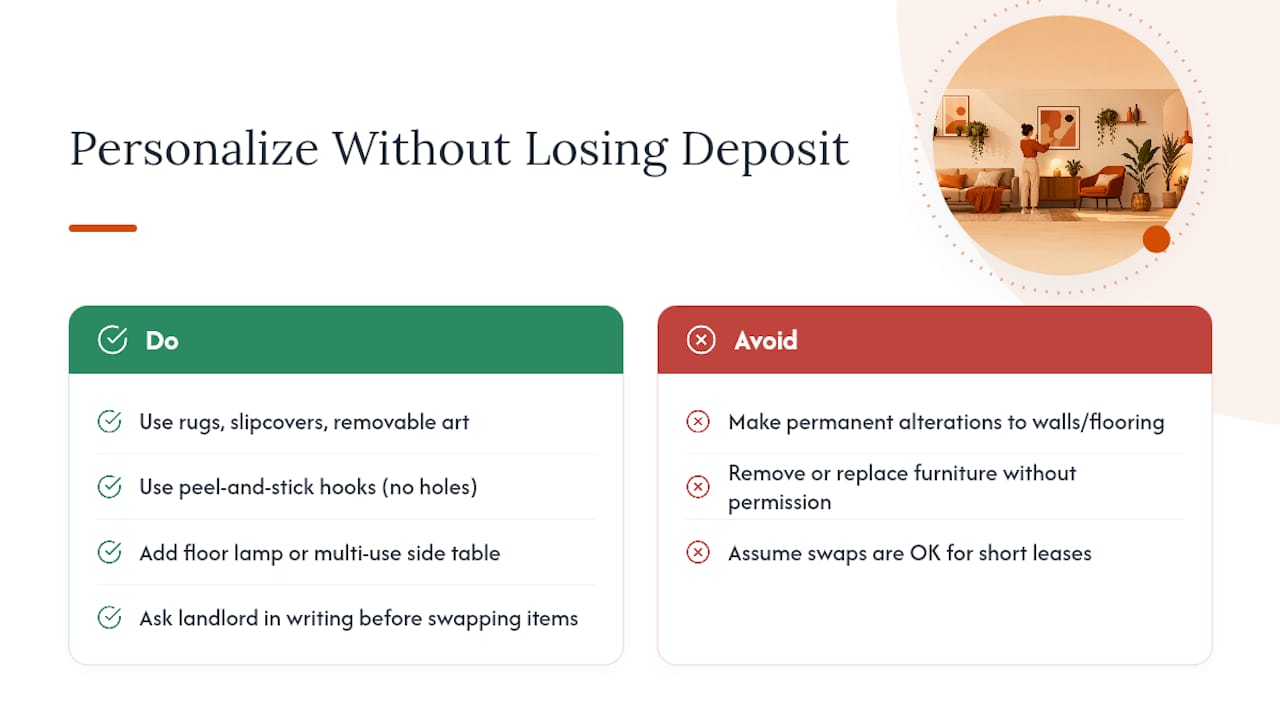
You can personalize a furnished space without risking a dime of your deposit. Rugs, peel-and-stick hooks, slipcovers, and removable art all add character without leaving marks. A better floor lamp or a multi-use side table can upgrade comfort fast, and under-bed storage bins solve the clutter problem most furnished units create.
Pro Tip: If you want to swap out a piece you genuinely dislike, like an uncomfortable mattress or a dated coffee table, ask the landlord in writing before you act. Some property managers will happily store the original piece and let you bring your own for a longer stay, especially if you’re signing a lease past the six-month mark.
How Professional Providers List Furnished Inventory
Because no universal standard defines “furnished,” the providers who do it well lean on documentation instead of vague promises. Phoenix Furnished Rentals is a working example: its property pages for corporate travelers and relocating professionals lay out detailed inventories and photos property by property, rather than a blanket “fully furnished” claim covering every unit the same way.
A detailed property page that shows exactly what’s in a unit, down to the kitchen gear and linens, does more to build trust than any marketing label ever could.
Reading a provider’s individual property listings, rather than trusting a generic “furnished” tag on a search filter, is one of the fastest ways to verify what you’re actually getting before you book.
What Renters Get Wrong About “Furnished”
Most advice on this topic treats “furnished” as a single fixed category, and that’s the core mistake. The research is clear that there’s no standard definition, which means the word on a listing tells you almost nothing on its own. What matters is the inventory behind it.
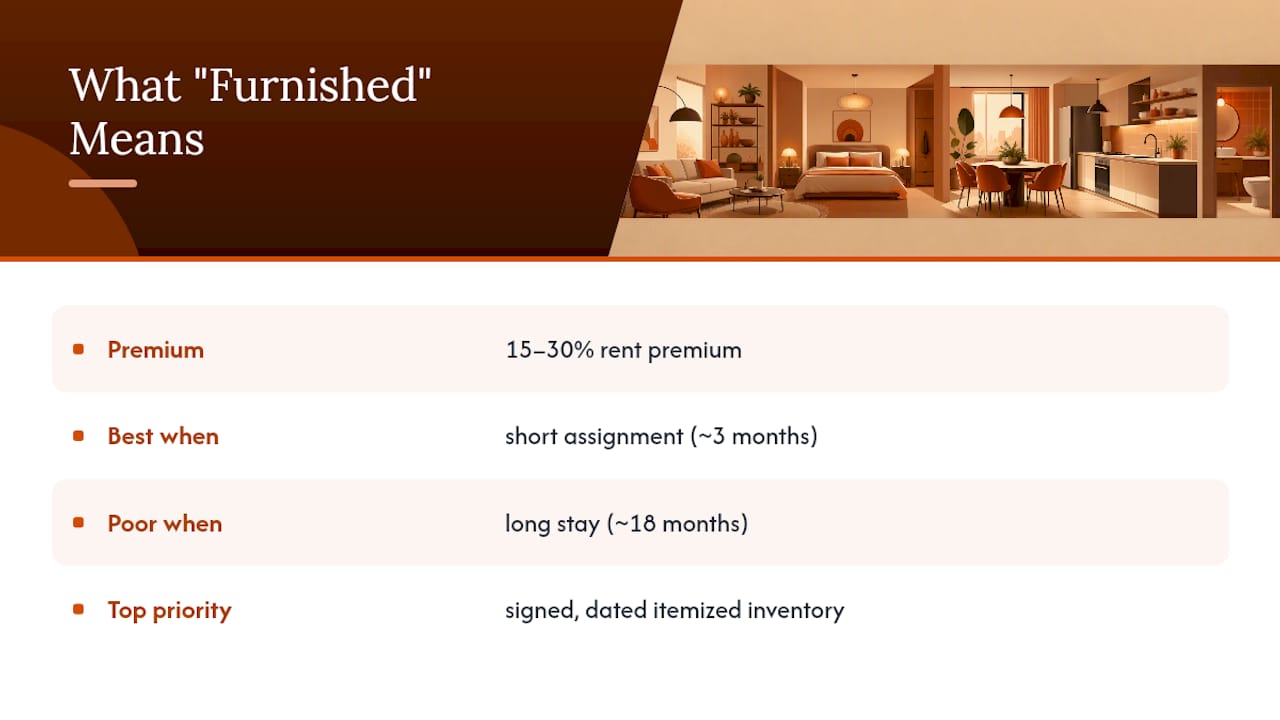
The conventional wisdom, “furnished is more expensive but more convenient,” is true but incomplete. It skips the timeline math entirely. A furnished apartment at a 15% to 30% premium is a smart trade for a three-month assignment and a poor one for an eighteen-month stay where you’d rather own your furniture outright. Duration should drive the decision, not convenience alone.
If there’s one thing to prioritize above everything else in this guide, it’s the itemized inventory attached to the lease. Not the listing photos. Not the verbal walkthrough. A signed, dated document that both you and the landlord agree on before you unpack a single box. That single habit prevents more deposit disputes than any other precaution on this list.
— Sean
Sources
- The pros and cons of furnished vs unfurnished rentals
- Furnished vs. unfurnished apartments explained
- What is a furnished apartment? | ApartmentGuide
FAQ
Does a furnished apartment come with a bed?
Almost always, yes, a bed frame and mattress are among the most consistently included items. Linens like sheets and pillows are less reliable, so confirm that separately.
What does it mean if an apartment is furnished?
It means the rental includes major furniture, at minimum a bed, sofa, and basic kitchen appliances, so you don’t need to buy or move your own. Exact inclusions vary by listing, since there’s no universal standard defining the term.
Is it a good idea to rent a furnished apartment?
It’s usually a smart move for stays of roughly one to twelve months, since furnished rentals cost 15% to 30% more per month but eliminate furniture-buying and moving costs. For stays much longer than that, unfurnished often becomes the better financial choice.
What counts as a furnished apartment?
At minimum, a furnished apartment includes core furniture like a bed, sofa, and major kitchen appliances. Whether it also includes linens, cookware, Wi-Fi, or utilities depends entirely on the individual listing, which is why an itemized inventory matters more than the label itself.