
An early check-in policy is a documented rule set that spells out when guests can access a furnished rental before the standard check-in time, what it costs, and how availability gets confirmed. The right approach for most hosts: offer it free when the unit is already clean and ready, and sell a guaranteed paid version for guests who need certainty. Guests should ask for early access as soon as they book and request the paid guarantee if their travel plans leave no room for a “we’ll let you know” answer.
TL;DR:
- Early check-in fees typically range from $20 to $100, with most operators charging 20 to 30 percent of one night’s rate for a two to three-hour window.
- Policies should specify clear availability conditions, such as cleaning completion or guest payment for guaranteed access, to prevent disputes.
- Automatic, calendar-based confirmation and proper lock workflows are essential to avoid conflicts and ensure guests receive access as promised.
- Messaging timing is crucial; provide check-in instructions a day before arrival or immediately for same-day bookings to manage guest expectations effectively.
- Having a documented, consistent policy with defined time bands and fees helps to create realistic guest expectations and protect against review damage.
Table of Contents
- What Belongs in a Written Early Check-In Policy
- What Should Early Check-In Cost, and Which Time Bands Make Sense?
- How Do You Operationalize Approved Early Arrivals?
- When Should You Message Guests About Early Access?
- How Phoenix Furnished Rentals Handles Early Arrivals
- What Actually Matters Here
- Ready to Book a Furnished Stay With Clear Arrival Terms?
- Sources
- FAQ
What Belongs in a Written Early Check-In Policy
A policy that only lives in your head will fail the first time two guests want the same 11 a.m. slot. Hostfully defines an early check-in policy as an operator-set rule covering terms, availability, and fees for arrivals before standard check-in, and that definition only works if you actually write it down somewhere the guest can see it before they show up with luggage.
Here’s what needs to be in that document, whether it lives on your listing page, your welcome guide, or both:
- Standard times, stated plainly. List your normal check-in and checkout hours, then follow with a conditional line: early access is possible but not automatic.
- Availability triggers. Spell out exactly what makes early check-in possible: no guest departing the night before, the cleaner confirming the unit is ready, or the guest paying for a guaranteed slot regardless of cleaning status.
- How the offer gets made and accepted. Note whether this happens through a pre-arrival message, an automated upsell in your booking platform, or a manual reply. If you’re on Airbnb, remember there’s no native early check-in line item. Fees usually get collected through Request Money in the Resolution Center, which is clunky but the accepted workaround.
- Defined time bands. “Early” can mean 30 minutes or six hours. Name the maximum window you’ll allow so nobody assumes unlimited flexibility.
- Fees shown before arrival, not sprung on someone at the door. Consent and cost need to be visible in writing, ideally with a timestamp, before the guest walks in.
Every one of these items exists to prevent the same argument: a guest who assumed early access was guaranteed and a host who never said otherwise in writing.
What Should Early Check-In Cost, and Which Time Bands Make Sense?
Pricing early check-in isn’t guesswork if you anchor it to real time bands. Most furnished rental operators recognize three tiers: micro-early (30 minutes to an hour, often free as a courtesy), half-day (two to four hours, the most commonly requested and priced tier), and full-day (effectively blocking the unit from the prior night, priced closer to a full night’s rate).
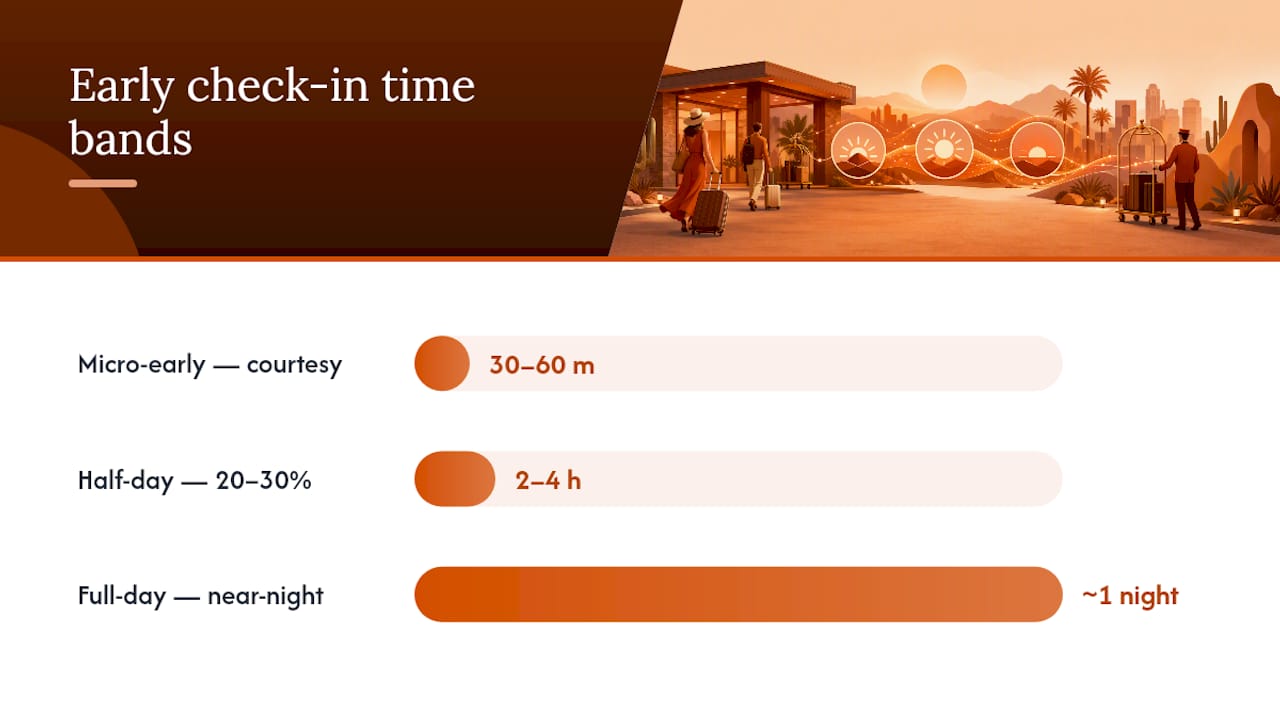
Market data from short-term rental pricing tools puts typical early check-in fees between $20 and $100, depending on how early the request is and the property’s tier. A useful anchor for the half-day window: 20 to 30 percent of one night’s rate for two to three hours of early access.
A few pricing rules that keep this simple:
- Charge a small token fee, or nothing at all, when the unit is already clean from the night before. You’re not creating extra work, so don’t price it like you are.
- Charge closer to the half-day or full-day rate when the request means blocking a night you could otherwise sell, or paying a cleaner to rush.
- Match your fee to your property tier. A studio loft charging $75 for early access reads very differently than a multi-bedroom executive suite charging the same.
- Decide upfront whether you’re running a free-when-ready model (flexible, guest-friendly, but no guarantee) or a guaranteed paid model (guest pays regardless, host blocks time to make it happen). Most successful listings offer both, with the paid option priced as true insurance against uncertainty.
That 20 to 30 percent figure isn’t arbitrary. It reflects what BnBGenius’s analysis of host pricing found works across a range of property types, and it’s a good starting anchor even if you adjust up or down for your specific market.
How Do You Operationalize Approved Early Arrivals?
A policy on paper means nothing if your cleaning team, your locks, and your calendar aren’t talking to each other. This is where most early check-in promises fall apart. Here’s the sequence that keeps it from happening:
- Check the calendar before you offer anything. Property management software like Hostaway, Hostfully, or Lodgify can trigger early check-in offers automatically, but only when the system confirms no prior guest occupied the unit the night before. Hostaway’s own documentation frames this as the core function of PMS-driven upsells: never promise access the calendar can’t back up.
- Protect your minimum clean window. Never compress the time your cleaning team needs to do the job right. If a same-day turnover requires a rush, pay the cleaner a bonus or make rush jobs opt-in rather than mandatory.
- Build a smart lock workflow with a backup plan. Decide when codes activate (only after cleaner confirmation, never before) and have a manual key exchange or a neighbor contact ready if the lock’s connectivity fails.
- Confirm in sequence, every time. Cleaner marks the unit ready, you verify in your task app, you message the guest, then you activate access. If the cleaner hasn’t confirmed by the requested time, offer an alternative instead of guessing.
Pro Tip: Log every cleaner confirmation in your PMS or task app, even for a two-second “done” text. When a guest disputes an early check-in denial later, that timestamp is the difference between a quick resolution and a drawn-out argument.
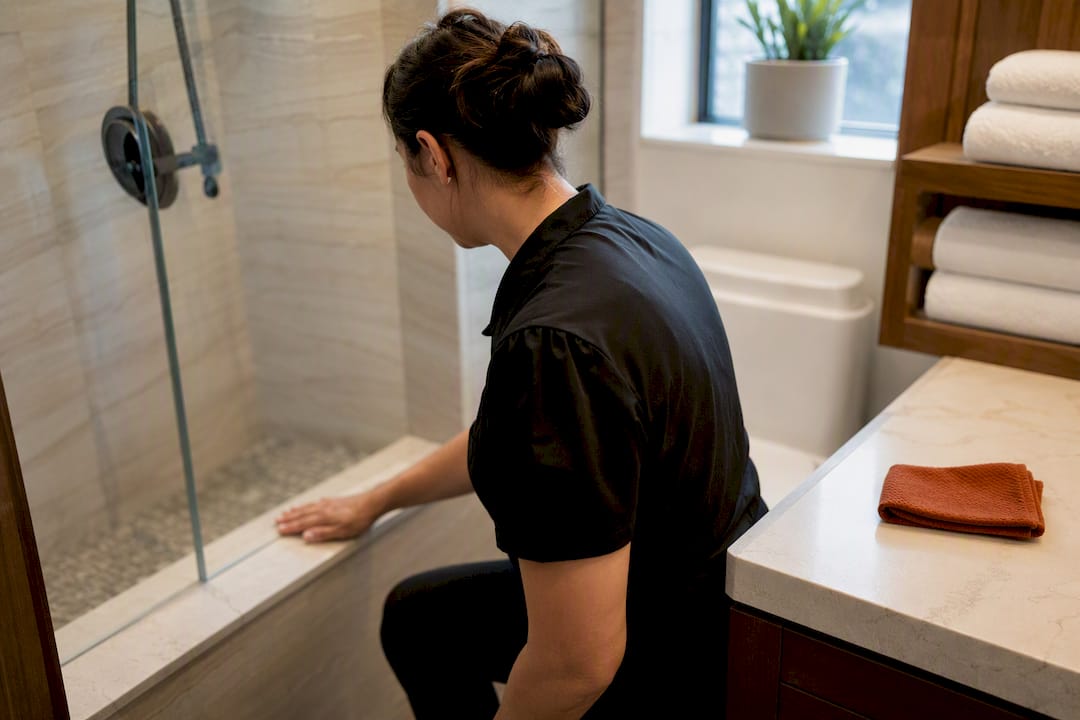
Skipping the minimum clean window to squeeze in an early arrival is the single fastest way to turn a five-star review into a two-star one over a damp bathroom.
When Should You Message Guests About Early Access?
Timing matters almost as much as the policy itself. Send check-in instructions the afternoon before arrival for standard bookings. That’s the window guests check messages and can still adjust travel plans. For same-day bookings, send instructions immediately after the reservation confirms, since there’s no next-day buffer to rely on.
Three message templates cover most situations:
- Conditional approval: “Your unit should be ready by [time]. We’ll confirm the morning of your arrival once housekeeping finishes.”
- Paid guarantee offer: “Want guaranteed access at [time] regardless of cleaning status? We can lock that in for [fee].”
- Polite decline with an alternative: “We can’t guarantee early access that day, but you’re welcome to drop luggage at [location] and explore [nearby suggestion] until we confirm.”
Always name the fee in writing before the guest pays anything, and remember that platforms like Airbnb route those payments through their own resolution tools rather than a built-in checkout line. A model policy line worth borrowing: request 24 hours in advance for a shot at free early access, or pay for a guaranteed slot, and otherwise plan to drop bags and explore until you hear back.
How Phoenix Furnished Rentals Handles Early Arrivals
Our company runs the same conditional model described above across various furnished rental listings. When a unit like the Papago Vista Loft sits empty the night before a guest’s arrival, early access is usually free, confirmed by early afternoon the day before check-in. When the calendar is tighter, guests can pay for a guaranteed slot instead of gambling on availability.
That structure only works because the cancellation terms and early access rules are consistent with each other. Guests reviewing the cancellation policy alongside arrival details get a full picture before they book, not a surprise mid-stay. The lesson for other hosts: your early check-in language and your broader booking terms should read like they were written by the same person, because inconsistency between the two is where guest complaints start.
What Actually Matters Here
Most advice on early check-in treats it as a customer service nicety. That framing undersells the real risk. A vague “we’ll try our best” policy doesn’t just create occasional friction. It creates a pattern where guests start expecting free early access as a default, and the one time you can’t deliver it, you get a review that reads like a broken promise instead of a reasonable limitation.
The fix isn’t complicated, but it does require discipline most hosts skip: write the policy down, name your fees, and build the guaranteed paid tier even if you rarely sell it. That option alone changes the conversation from “can I get in early” to “how much does certainty cost,” which is a much easier problem to solve at 9 a.m. on move-in day.
If there’s one place conventional advice falls short, it’s treating cleaning time as flexible. It isn’t. A rushed clean to accommodate one early arrival tends to cost more in review damage than the early check-in fee ever recovers.
— Sean
Ready to Book a Furnished Stay With Clear Arrival Terms?
We document our early check-in and standard arrival procedures on listings to help guests know what to expect before arrival. Our team confirms access details the day before guests’ stays whenever possible to facilitate early arrival logistics.
Browse available units on the Phoenix Furnished Rentals homepage, or check out a specific listing like the Desert Sky Loft to see how arrival instructions are presented before you book. Questions about timing or a guaranteed early check-in? Reach out through the listing page and we’ll confirm what’s possible for your dates.
Sources
- Early Check-In Policy | Hostfully
- Airbnb Early/Late Done Right: Pricing, Rules, and Cleaner Coordination | BnBGenius
- What is Early Check-In? | Hostaway
FAQ
What Is Early Check-In for a Furnished Rental?
It’s host-controlled access to a furnished apartment or loft before the listed standard check-in time, usually granted for free when the unit is already clean or offered as a paid guarantee when it isn’t.
How Much Does Early Check-In Typically Cost?
Fees generally run $20 to $100, with a common anchor of 20 to 30 percent of one night’s rate for a two-to-three hour early access window.
How Far in Advance Should I Request Early Check-In?
Ask as soon as you book, and follow up 24 hours before arrival. Hosts typically confirm the day before, once cleaning schedules are locked in.
What Happens if Early Check-In Isn’t Available?
Most hosts offer alternatives like luggage storage on-site or nearby, plus a suggested café or park where you can wait until the unit is confirmed ready.
Does the company offer early check-in?
Yes. Early access is offered free when a unit is already clean and as a guaranteed paid option when guests need certainty regardless of the cleaning schedule.
Is Early Check-In the Same as Late Checkout?
No. Early check-in extends access before the standard arrival time, while late checkout extends departure past the standard time. Both usually follow the same conditional, fee-based logic tied to the next guest’s arrival.