
A mid-term rental is a furnished, move-in-ready home leased on a monthly basis, typically for stays of about 30 days up to 12 months, with most bookings clustering around 3 to 6 months. It sits between a nightly hotel-style booking and a standard year-long lease. Most units come billed monthly, fully furnished, and set up so a tenant can arrive with minimal belongings and start living.
TL;DR:
- Mid-term rentals generally last between one and six months, with most bookings around three to five months, set on a monthly billing cycle with enforceable leases.
- Occupants are often traveling professionals like nurses, corporate employees, or families in transition who need furnished, flexible housing without the long-term commitment.
- A typical lease specifies exact start and end dates, rent, security deposit, utilities, inventory, and early-termination policies, requiring renters to prepare ID, proof of income, and references.
- Local laws can treat stays under 30 days as hotel-like short-term lodging, imposing occupancy taxes, while longer stays may trigger tenant protections and legal considerations.
- Demand for furnished mid-term rentals continues to grow due to remote work, relocations, and healthcare staffing, with providers like Phoenixfurnishedrentals offering fully equipped units tailored for these needs.
Table of Contents
- What Is a Mid-Term Rental and How Long Does It Usually Last?
- How Do Mid-Term, Short-Term, and Long-Term Rentals Compare?
- Who Actually Books Mid-Term Rentals?
- What Should You Expect in a Mid-Term Lease?
- Weighing the Pros and Cons for Tenants and Hosts
- Do Local Laws Treat 30-Day Stays Differently?
- Why Mid-Term Rentals Are Having a Moment
- How a Furnished Rental Service Fits Into a Mid-Term Stay
- Sources
- FAQ
What Is a Mid-Term Rental and How Long Does It Usually Last?
The 30-day mark isn’t arbitrary. Industry sources define a mid-term rental as a fully furnished property leased for roughly 30 days up to 12 months, with most stays landing between one and six months. Go shorter than 30 days and you’re back in short-term, nightly-rate territory. Go past 12 months and most people just call it a regular apartment lease.
“Furnished” or “turnkey” in this context usually means:
- A full furniture set: bed, sofa, dining table, and workspace
- Kitchen basics: cookware, dishes, small appliances
- Linens, towels, and Wi-Fi already set up
- Utilities sometimes bundled into rent, sometimes billed separately
The billing structure matters as much as the furniture. A mid-term stay is priced and paid monthly rather than nightly and usually involves signing an actual lease document instead of confirming a reservation. That distinction shows up later when disputes happen. A lease gives both sides enforceable terms; a booking confirmation mostly doesn’t.
How Do Mid-Term, Short-Term, and Long-Term Rentals Compare?
The three rental categories solve different problems, and the pricing model tells you almost everything about which one you’re looking at.
- Short-term rentals (under 30 days) price by the night, often include cleaning fees per stay, and treat the guest more like a hotel customer than a tenant. Turnover is constant. Hosts clean, restock, and re-screen for nearly every arrival.
- Mid-term rentals (30 days to 12 months) price by the month, usually skip per-stay cleaning fees, and involve some form of tenant screening even if it’s lighter than a standard apartment application.
- Long-term rentals (12+ months) price annually in practice even though rent is paid monthly, require full lease agreements, and generally fall under stronger tenant-protection laws.
The cost math shifts as duration extends. Nightly rates carry the highest per-night cost because they absorb constant turnover expenses. Monthly mid-term rates run higher than a standard annual lease per month, but far below stacking 90 nightly rates. Long-term leases win on raw monthly cost but lose on flexibility.
Local law also tracks duration. Many cities apply occupancy or hotel taxes below 30 days that disappear once a stay crosses into month-to-month territory, while tenant protections tend to strengthen the longer someone stays.
As a rough rule: book short-term for a vacation or a week-long trip, mid-term for anything tied to a temporary assignment or a home search, and long-term when you know you’re staying put for at least a year.
Who Actually Books Mid-Term Rentals?
Mid-term housing serves a specific set of situations where someone needs a real home, just not permanently. Common occupants include traveling nurses on 13-week contracts, corporate employees on extended assignments, students doing a semester internship, and families in transition after a sale, a renovation, or an insurance claim on their permanent home.
What draws these renters to mid-term housing specifically:
- No furniture to buy, sell, or move for a stay with a known end date
- A real address while house-hunting or apartment-hunting in a new city
- Flexibility that a 12-month lease can’t offer without an early-termination penalty
- Predictable monthly billing instead of a fluctuating nightly rate
A travel nurse on a 13-week hospital contract is the textbook case. So is a family whose house flooded and needs six months to rebuild, or a software engineer relocating for a new job who wants three months in the city before committing to a neighborhood.
What Should You Expect in a Mid-Term Lease?
A mid-term lease reads more like a real tenancy agreement than a vacation booking confirmation, and that’s by design. Landlord guidance on the topic recommends spelling out house rules, monthly rent and fees, and maintenance responsibilities before either side signs.
A solid mid-term lease typically covers, in this order:
- Exact term length — a start date and end date, not just “about three months”
- Rent amount and due date, plus how late fees work if payment slips
- Security deposit amount and the conditions for getting it back
- Early-termination policy, including any penalty or notice period
- Utilities breakdown — what’s included in rent versus what the tenant sets up separately
- Furnished-unit inventory list, so nobody argues over a missing lamp at move-out
- Cleaning expectations, since mid-term units rarely get the between-stay deep clean a nightly rental gets
Renters should have ID, proof of income, and sometimes references ready before applying, since screening for mid-term tenants tends to be more thorough than a one-night booking but lighter than a full year-long apartment application. Landlords, for their part, need insurance coverage that accounts for tenants staying weeks or months rather than a single weekend.
Pro Tip: Ask for a written inventory list with photos before you move in and before you move out. It’s the single easiest way to avoid a deposit dispute over furniture condition on either side.

Weighing the Pros and Cons for Tenants and Hosts
Mid-term rentals trade some things for others, and the trade-off looks different depending on which side of the lease you’re on.
For tenants, the upside is real convenience: no furniture purchase, no utility setup hassle, and a lease shorter than a year if your situation is temporary. The downside is cost. Monthly rent on a furnished mid-term unit usually runs higher than an unfurnished long-term apartment, because the price bakes in furniture, service, and flexibility.
For hosts, mid-term stays offer steadier income than nightly short-term rentals without the constant cleaning and re-listing cycle. The trade-off is more turnover than a 12-month tenant, plus the ongoing cost of maintaining furniture that a long-term landlord simply doesn’t carry.
Switching from short-term to mid-term operations changes more than the calendar. Insurance policies need to reflect longer occupancy. Screening becomes a real process instead of an instant-book click. Maintenance shifts from post-checkout turnovers to periodic check-ins during a live tenancy.
Do Local Laws Treat 30-Day Stays Differently?
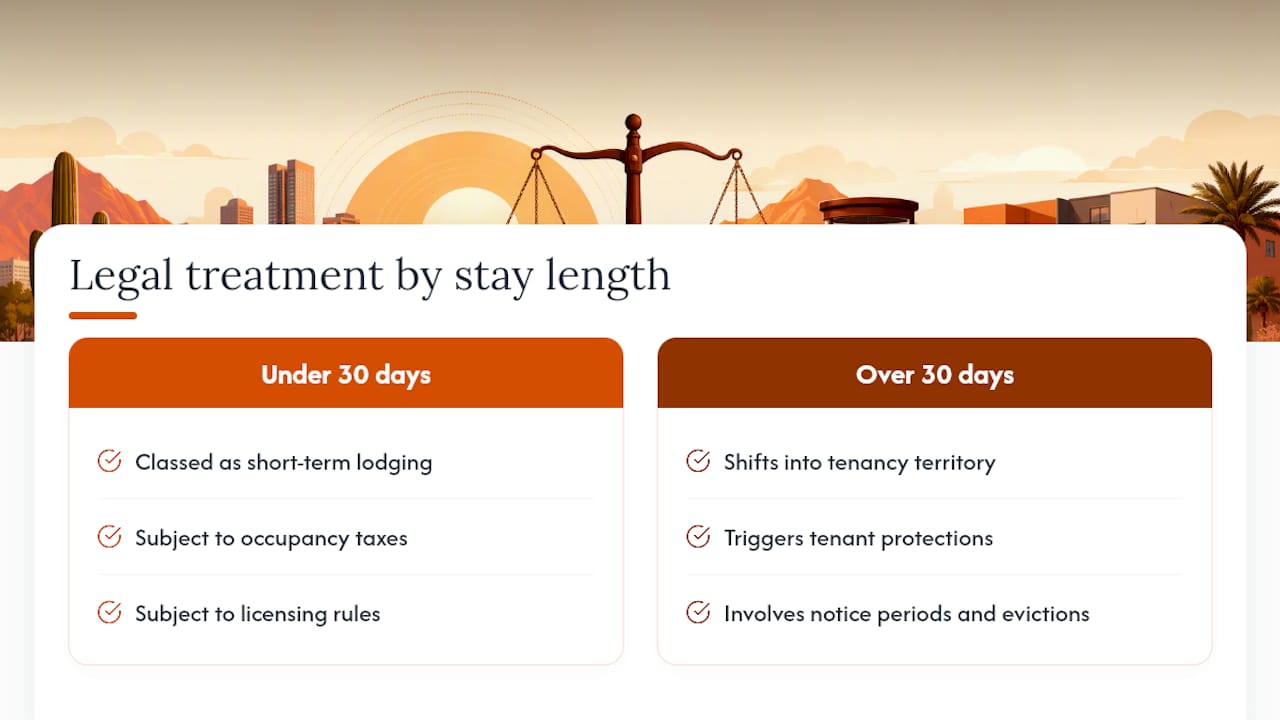
Crossing the 30-day mark is a legal tripwire in a lot of U.S. cities, not just an industry convention. Below that threshold, a stay often counts as short-term lodging and can trigger occupancy taxes and licensing rules similar to hotels. Cross it, and the unit frequently shifts into tenancy territory, which can bring tenant protections landlords need to plan around, from notice periods to eviction procedures.
These rules vary by city and even by neighborhood zoning, so a general explainer can’t tell you exactly what applies to your address. Check your local housing authority’s website or talk to a real estate attorney before signing or listing anything close to that 30-day line. The stakes are higher than they look on paper.
Why Mid-Term Rentals Are Having a Moment
Demand for furnished, flexible housing has grown steadily since 2020, driven by remote work, traveling healthcare staff, and corporate relocation cycles that no longer assume a permanent address. Booking patterns at Phoenixfurnishedrentals reflect that shift directly: more guests arriving with a defined end date in mind rather than an open-ended lease. The category isn’t a temporary trend. Its growth reflects changes in how people work and move.
— Sean
How a Furnished Rental Service Fits Into a Mid-Term Stay
If you’ve made it this far, you already know what to look for: furnished units, monthly billing, and a lease that doesn’t lock you in for a year you can’t commit to yet. That’s exactly what Phoenixfurnishedrentals offers across its downtown Phoenix properties, built for corporate travelers, relocating professionals, and travel nurses who need a real home base without the furniture-buying detour.
Units typically include a fully equipped kitchen, in-unit laundry, a workspace, and Wi-Fi, so the setup checklist most mid-term renters dread simply doesn’t apply. Travel nurses working a Phoenix-area contract can check current availability on the traveling nurse housing page, while relocating professionals can browse flexible lease terms built around a job transition rather than a fixed calendar year. Book a stay or request a quote directly through Phoenixfurnishedrentals to see current unit availability for your dates.
Sources
- What is a mid-term rental? | PriceLabs
- Apartments
- Mid-Term Lease Agreement & Rentals | TurboTenant
- What Is Mid-Term Rental (MTR) in Short-Term Rentals | AirROI
- Housing leases in the U.S. rental market | BLS
FAQ
What’s the difference between a mid-term and a short-term rental?
Short-term rentals are billed nightly and typically last under 30 days, often carrying occupancy taxes similar to hotels. Mid-term rentals are billed monthly, run from about 30 days up to 12 months, and usually involve a lease rather than a booking confirmation.
How do mid-term rentals actually work?
A tenant signs a monthly lease for a furnished unit, pays rent on a set due date, and typically covers utilities either bundled into rent or set up separately, with move-in requiring the same basic screening as a standard rental application.
What income do you need to comfortably afford $1,200 monthly rent?
Most landlords and financial guidelines recommend rent stay at or below 30% of gross monthly income, which helps ensure rent affordability relative to income.
What makes a good mid-term rental?
A good mid-term rental combines genuinely furnished essentials (kitchen, linens, Wi-Fi), a clear lease with a defined term and early-termination policy, and a location that fits a temporary work assignment or housing transition, which is the setup typically provided in downtown Phoenix furnished rental units.