
Most monthly furnished rentals should be booked a few months ahead of your move-in date. The exception is high-demand seasons, festivals, or major relocations, which often require booking several months or more in advance. If your dates might shift, prioritize a listing with flexible cancellation or a short renewal clause before you commit.
TL;DR:
- Booking months in advance is essential for high-demand events, peak seasons, or major relocations to secure availability and favorable rates.
- For off-season or rural markets, a reservation may be possible with only two to four weeks’ notice, often at lower prices.
- Stay length, cancellation terms, fixed logistics, and verification requirements significantly influence the appropriate booking window.
- Booking through a direct provider with clear, published cancellation and renewal policies reduces timing risks and simplifies move-in readiness.
- Fix your booking early for fixed deadlines like job start dates or festivals, but consider waiting if your dates are flexible and local off-season inventory opens later.
Table of Contents
- How demand and scenario change the ideal booking window
- Core factors that should decide your timing
- Practical booking timeline: what to do at 6+ months, 3 months, 1 month, 2 weeks
- Alternatives, negotiation points, and tech tools to reduce timing risk
- Why a direct furnished-rental provider can simplify timing
- When I recommend booking early versus waiting
- Ready to check monthly availability in Phoenix
- Sources
- FAQ
How demand and scenario change the ideal booking window
The right booking window depends less on the calendar date and more on what is competing for the same inventory. A city hosting a marathon, a music festival, or a major conference sees furnished units disappear months in advance, sometimes the same weeks each year as returning attendees rebook early. Anyone planning around one of these events should treat three to six months out as the safe zone, not the early one.
Corporate relocations and job-driven moves follow a different rhythm. Companies often start housing search one to three months before a start date, and that window tightens when the move lines up with a new quarter or a pay cycle, since HR departments tend to process housing budgets on that schedule. A software engineer starting a new role on the first of a fiscal quarter is competing with every other new hire relocating on the same date.
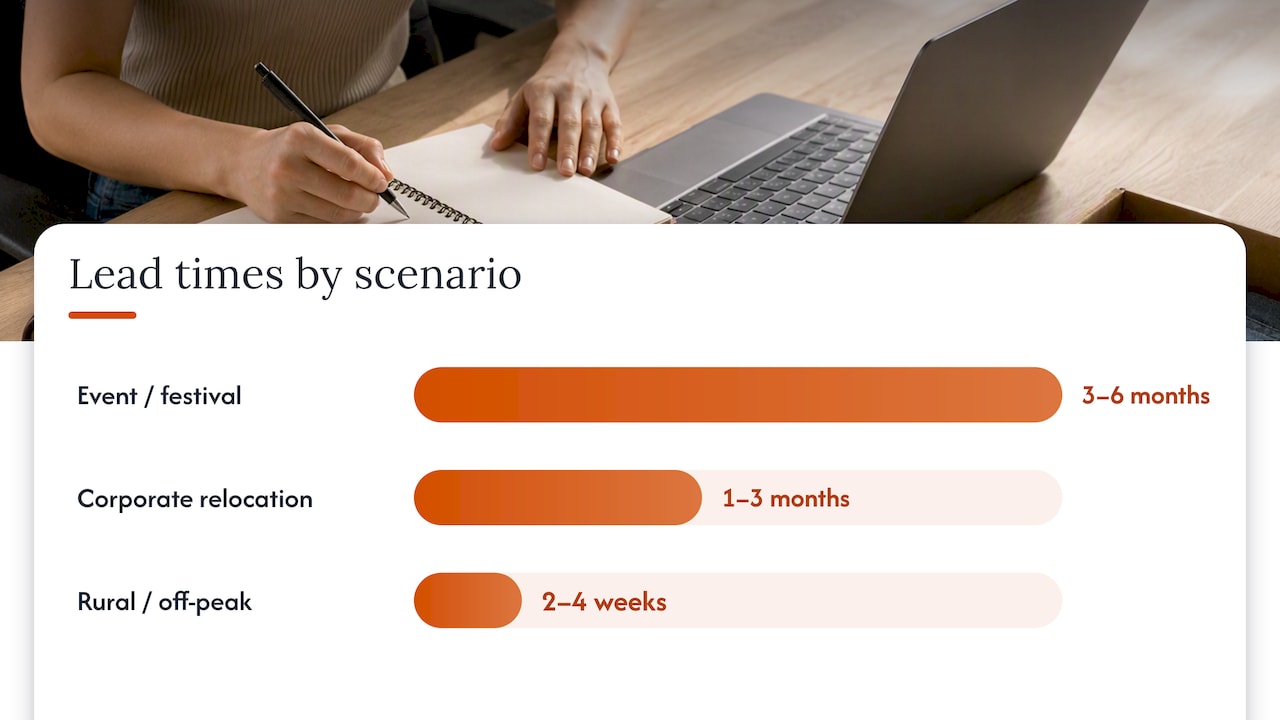
Off-season and rural markets behave almost in reverse. A monthly rental in a small town outside peak tourist months can often be booked two to four weeks out, sometimes with better pricing because the property manager wants the calendar filled.
A few scenarios show how differently this plays out:
- A traveler chasing a festival weekend often needs to book the room six months ahead because return visitors already have it flagged.
- A ski town rental for the winter season tends to fill by early fall, well before snow arrives.
- A corporate relocation tied to a quarter start usually locks in one to three months ahead, timed to internal approval cycles.
- A rural or off-peak monthly stay can sometimes be arranged with only two to four weeks of notice.
Core factors that should decide your timing
The calendar matters less than the specifics of your stay. Before you decide how far ahead to book, run through the variables that actually create urgency or give you room to wait.
- Stay length and renewal structure: a month-to-month arrangement with automatic renewal gives you more flexibility than a fixed multi-month block, which usually needs to be locked in earlier.
- Cancellation and deposit terms: know exactly when a deposit becomes non-refundable and how much notice a property requires to end or change the stay.
- Price sensitivity: early booking often secures a lower monthly rate, since many managers raise prices as availability tightens closer to the date.
- Fixed logistics: flights, moving trucks, or vehicle pickups that are already scheduled remove your flexibility and should drive your booking date, not the other way around.
- Verification steps: background checks, income documentation, or employer verification can add days to the approval process, so factor that delay into your timeline.
Sample lease language from the HUD sample lease provisions shows how monthly agreements are typically structured, with automatic renewal for successive one-month terms and a 30-day notice requirement for either party to end the arrangement. That kind of clause is worth asking for by name if a landlord’s default lease does not already include it.
Pro Tip: Ask for the exact cancellation deadline in writing before you pay any deposit, not just a verbal assurance that “it’s flexible.”
Practical booking timeline: what to do at 6+ months, 3 months, 1 month, 2 weeks
A monthly rental search goes more smoothly when it is broken into stages rather than treated as a single decision. Here is a practical sequence to follow as your move-in date approaches.
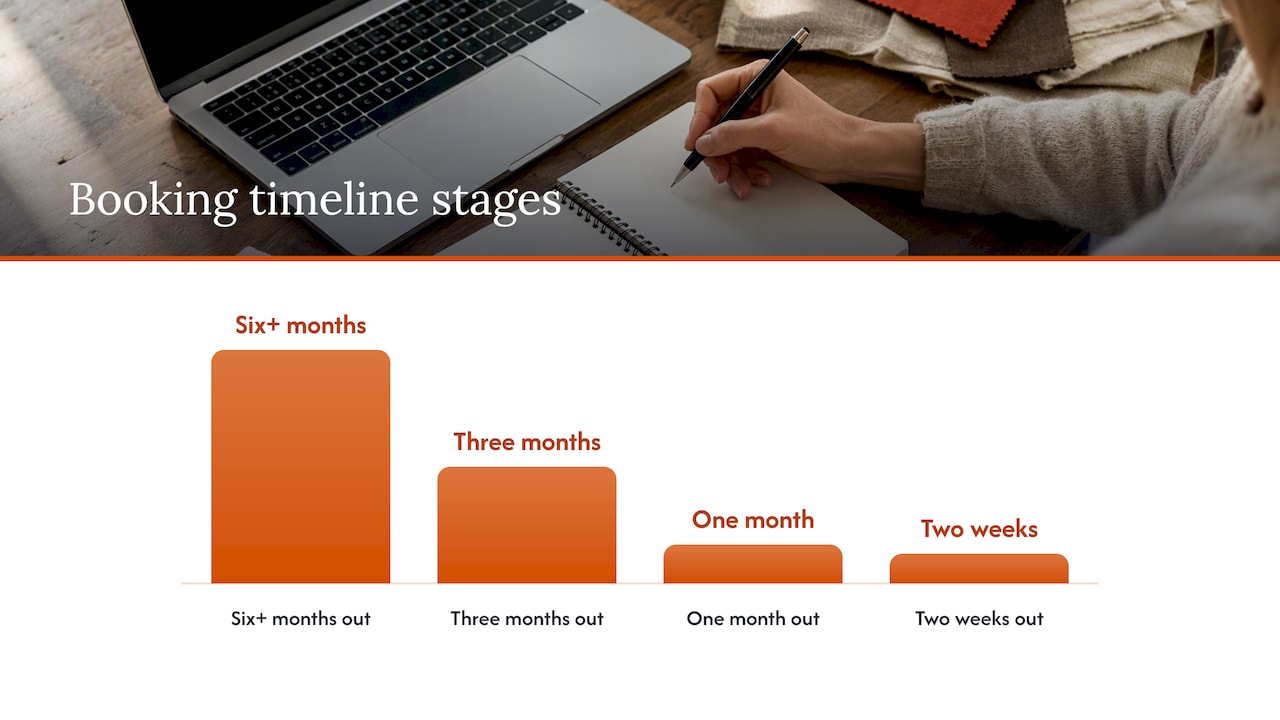
- Six or more months out: start watching listings in your target neighborhood, set price and availability alerts, and note what a normal monthly rate looks like so you can spot a good deal later.
- Three months out: place a refundable holding deposit if the property allows it, read the lease or cancellation terms line by line, and start coordinating logistics like flights or movers around a realistic move-in window.
- One month out: finalize payment, confirm renter’s insurance if required, and get written move-in instructions, including key handoff or lockbox codes.
- Two weeks out: reconfirm your reservation, save an emergency contact for the property manager, and build a short arrival checklist covering utilities, WiFi setup, and parking.
If you are booking at the last minute, a few tactics reduce risk. Keep your dates flexible by a day or two if possible, since managers sometimes have a same-week cancellation that opens up a better unit. A short-term nightly stay booked as a bridge, followed by a monthly lease secured once you are local and can view units in person, spreads out the risk of committing to a property sight unseen. Splitting the booking this way costs a little more upfront but avoids locking into a lease you have not actually seen.
Rental businesses that manage timelines well tend to communicate processing windows clearly. The How to Rent Textbooks, Books, and More help page, while focused on a different kind of rental, is a useful example: it specifies shipping within two business days and a grace period before late fees apply. That same principle, clear communication about what happens and when, is what to look for in a monthly rental confirmation.
Alternatives, negotiation points, and tech tools to reduce timing risk
Booking too early or too late both carry risk, but a few habits reduce the downside either way.
- Ask directly for a clear refund window, a 30-day notice renewal clause, or a short-term hold before paying anything.
- Negotiate a refundable holding deposit and get the terms in writing, including the exact date it becomes non-refundable.
- Use saved searches, price alerts, and calendar-syncing apps to track listings instead of checking manually every few days.
- Consider a split strategy: book a short nightly stay first, then move into a monthly property once you can view it locally.
- Call the property manager directly when a listing is ambiguous about renewal or cancellation terms rather than relying on the online listing alone.
Groups or families coordinating a longer stay together benefit from shared tools rather than one person tracking everything solo. Resources like Multi-Family Vacation Planning Without the Spreadsheet outline how saved searches and shared itineraries keep a group aligned when several people are watching the same booking window.
Pro Tip: If a listing’s cancellation policy is vague, treat that vagueness itself as a red flag and ask for specifics before paying a deposit.
Why a direct furnished-rental provider can simplify timing
Booking through a direct furnished-rental provider removes some of the guesswork that comes with peer-to-peer listings. Phoenix Furnished Rentals offers fully furnished lofts and apartments built for monthly stays, with equipped kitchens, in-unit laundry, and workspaces already in place, so move-in readiness is not something you have to verify at the last minute.
The properties, such as the Sunset Casita, list amenities and photos on their own detail pages, which lets a reader check exactly what they are booking before committing to a date. A published cancellation policy, rather than a case-by-case negotiation with an individual landlord, can mean the terms are set before you ever pay a deposit.
For readers weighing how far ahead to book, working with a provider who controls unit readiness and documents renewal and cancellation terms up front removes one of the biggest sources of timing risk: the uncertainty of whether a unit will actually be ready, and on what terms, when your date arrives.
When I recommend booking early versus waiting
Lock in your booking early when a fixed deadline is driving the decision: a job start date, a move that is already scheduled, or a stay that overlaps a festival or peak season. Waiting makes sense only when your dates are genuinely flexible and you are in a market where off-season inventory tends to open up close to arrival. My rule of thumb: if a fixed date exists anywhere in your plan, book to protect that date first and negotiate flexibility second.
— Sean
Ready to check monthly availability in Phoenix
Once you know your booking window, the next step is finding a property that will actually be ready when you arrive. Phoenix Furnished Rentals offers a range of furnished lofts, from the Roosevelt Row Loft to Scholars Loft to The Neon Circuit Loft, each move-in ready with a fully equipped kitchen, in-unit laundry, and a workspace, so you are not left waiting on furniture deliveries or setup after signing a lease.
If your dates are firm, whether for a corporate relocation, a travel nursing assignment, or a longer stay in the city, check current availability on the properties page or reach out directly to ask about custom dates.
Sources
FAQ
Is rent due on the 1st or the last day of the month?
This depends entirely on the lease, but many monthly rental agreements set rent due on the first of the month for the upcoming term. Some furnished rental providers instead charge at the start of each stay period rather than tying it to a calendar month, so check the specific agreement before assuming either default.
What is the shortest time you can rent a property?
Furnished rental terms vary by provider, with some allowing stays as short as a few weeks and others requiring a full monthly minimum. Always confirm the minimum stay length directly with the property or provider, since it is not standardized across the industry.
Is there an app for month-to-month rentals?
Several rental and travel platforms let you save searches and set alerts for month-to-month listings, which helps you track availability without checking manually. Using alert-based tools alongside direct outreach to a property manager tends to work better than relying on a single app alone.
How many days in advance should I book Airbnb?
For nightly vacation stays, booking windows differ from monthly rentals and often depend heavily on the destination’s demand cycle. For monthly furnished stays specifically, a one to three month window covers most situations, extending to three to six months or more around major events or peak seasons.
How can I extend or shorten a monthly booking once it starts?
Check the lease or booking terms for a renewal clause, since many monthly agreements, like the sample language in HUD’s lease provisions, include automatic renewal for successive terms along with a 30-day notice requirement to end the stay. Contact the property manager directly as early as possible if your plans change, since some flexibility is easier to arrange before the current term ends than after.