
A true live-work loft in downtown Phoenix is a unit zoned for both living and running a business. It is usually a ground-floor commercial space with a residence attached or above. Those units are scarce, usually unfurnished, and mostly leased on long terms. If you want a loft where you can live and work for a month, a season or a project, a furnished loft with a real workspace, fast WiFi and a walkable address is often the better fit. This guide covers both routes, with current rent figures and the city rules that matter.
TL;DR
- True live-work units pair commercial space with a home. Many Roosevelt Row buildings are designed that way, but availability is thin and leases are typically long.
- Downtown Phoenix rent averages about $2,027 a month, so budget for a loft with a workspace accordingly.
- Under City of Phoenix rules, a lease of 31 days or longer is not a short-term rental. Monthly stays avoid the STR permit process.
- If you only need a home base with a desk, a furnished loft booked by the month can do the job without a 12-month commitment.
Table of Contents
- What “live-work” means in Downtown Phoenix
- What a live-work loft costs
- The 31-day rule: why monthly stays are simpler
- Who a furnished live-work setup suits
- Why location matters if you work from home
- What to check before you rent a loft to work in
- Our perspective: what we see in lofts that actually work
- Furnished lofts in Roosevelt Row and downtown with us
- Moving in: planning the practical side
- FAQ
- Sources
What “live-work” means in Downtown Phoenix
The phrase gets used loosely in listings. Three things sit under it:
- Commercial-residential units. A storefront or studio at street level with living space behind or above. These are what the city has in mind when it supports the creative economy in the arts district. Roosevelt Row has developed a reputation as a district for local artists and creative businesses, and many buildings pair ground-floor commercial space with homes above.
- Loft apartments marketed as live-work. These are residential units with open plans, tall ceilings and room for a desk or easel. You live there and work in the unit, but you generally do not receive clients or run retail from it.
- Furnished lofts with a workspace. Same open, industrial feel, but move-in ready, and available by the month.
If you read through what ranks for this search, you will see all three mixed together: apartment communities with a “live work” floor plan, commercial listings for sale, and forum threads where renters report that what they found was often a commercial space with a small residence attached. That matches what you should expect on the ground. Know which of the three you are shopping for before you tour anything.
What a live-work loft costs
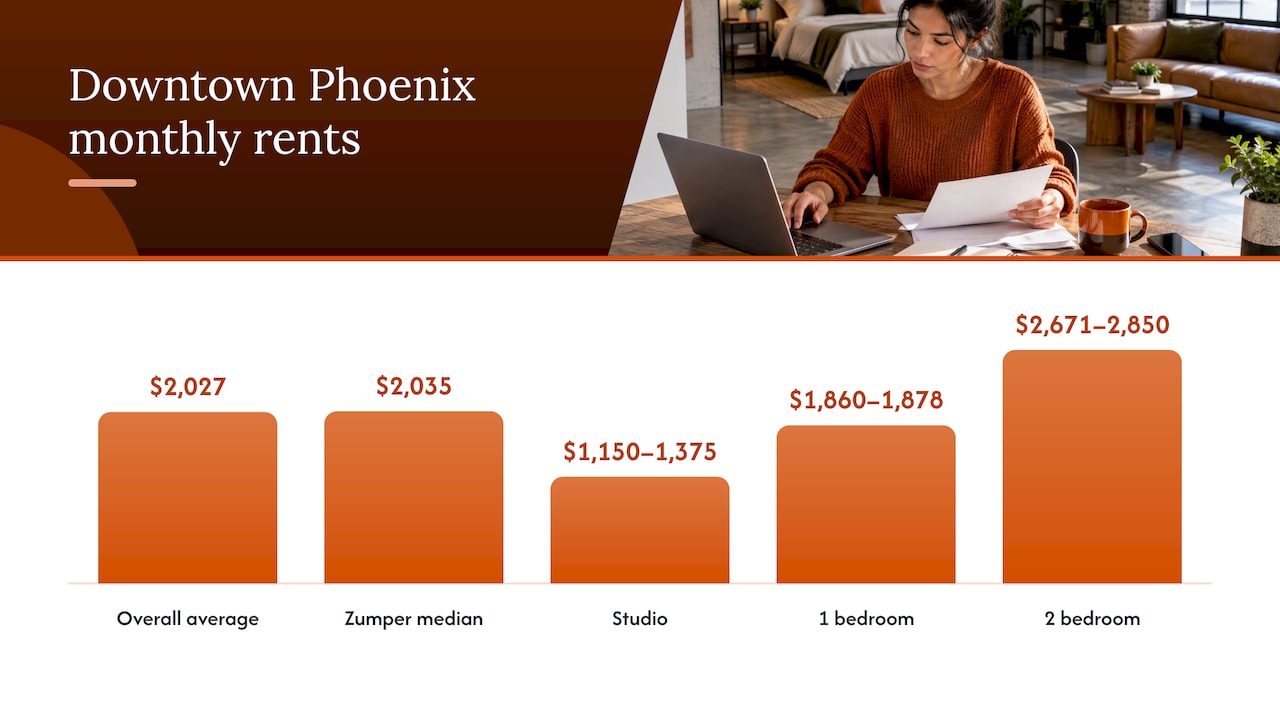
Prices vary by building, size and finish, but the neighborhood averages give you a baseline. As of October 2026, the average downtown Phoenix apartment rent is $2,027 a month, down 1.61% on the year. Zumper puts the median at $2,035 a month, about 7% above the national average.
By unit size, RentCafe’s figures run roughly like this:
| Unit type | Typical monthly rent, downtown Phoenix |
|---|---|
| Studio | $1,150 to $1,375 |
| 1 bedroom | $1,860 to $1,878 |
| 2 bedroom | $2,671 to $2,850 |
These are unfurnished averages on standard leases. Add utilities, internet, furniture and deposits, and the real cost of settling in is higher. That is where furnished monthly stays start to make sense for anyone who is not staying for a year or more.
The market is also not tight. In Q3 2026 the Phoenix multifamily vacancy rate was 10.7%, with positive net absorption of 4,366 units. In plain terms, there is supply and there is demand, so you have room to compare units and ask questions.
The 31-day rule: why monthly stays are simpler
If you are looking at anything shorter than a standard lease, one city rule shapes your choices. Phoenix regulates short-term rentals, and the city’s ordinance excludes residential leases of 31 days or longer from the definition. Stays shorter than that fall under the STR permit process, and owners must display the permit number in their advertising.
What that means for you:
- Booking a month or more: the STR permit process does not apply to your stay. You are in mid-term territory.
- Booking under 31 days: ask the host for the permit number and check it against the city’s registry before you pay.
- Not sure how a host classifies your stay: ask in writing. A clear answer is a good sign.
We go deeper on how this cutoff reshapes the market in our piece on the 30-day cutoff for mid-term rentals.
Who a furnished live-work setup suits
Remote workers and consultants. A loft with a defined desk area, reliable WiFi and a kitchen is a better office than a hotel room. You also get a washer and dryer, which matters after the first week.
Creative professionals on a project. Designers, photographers and artists on a three-month commission want inspiration nearby and no furniture to buy. Roosevelt Row is built for that. The district is very walkable, with murals, sculptures and art exhibits and a monthly First Friday event.

Relocating professionals. Most people moving to Phoenix for a job do not want to sign a 12-month lease on a neighborhood they have never lived in. A furnished month or three lets you learn the city first. Our guide to corporate housing options for professional relocations walks through the choices.
Traveling nurses. Downtown sits close to hospital clusters, and a loft with a quiet corner for sleeping between shifts is worth a lot. See our notes on travel nurse housing near the airport if you want to compare areas.
Why location matters if you work from home
When you work where you live, the neighborhood becomes your commute, your lunch break and your coffee meeting. The area near Roosevelt and Central Avenue is the most connected spot on the downtown light rail line, according to Downtown Phoenix Inc., with access to employment centers, the ASU Downtown campus and hospitals. If your work involves occasional trips, you can leave the car parked.
CityMatch rates the Roosevelt Row area as one of the more walkable places to live in Phoenix, where most daily errands can be done on foot, while noting that transit is not comprehensive. Summer heat makes walkability seasonal, so check how far the nearest shade, coffee and grocery stop really are before committing.
What to check before you rent a loft to work in
A loft that photographs well can still be a poor place to work. Use this list on any tour or virtual walkthrough:
- Noise. Hard floors, high ceilings and downtown nightlife carry sound. Ask which way the bedroom faces and visit in the evening if you can.
- A real desk. A kitchen island is not a workspace. Look for a dedicated desk and a chair you can sit in for eight hours.
- Internet. Ask for the provider and plan speed, and whether it is included. Run a speed test on arrival.
- Light. Big windows are great for mornings and brutal for afternoon video calls in Arizona. Check for blinds or shades.
- Kitchen and laundry. Full kitchens and in-unit laundry save time and money over a month.
- Parking and access. Ask about parking if you have a car, and whether deliveries and visitors are easy.
- Rules on business use. Residential units are not zoned for client visits or retail. If you need that, you are looking at a true commercial-residential unit, and city requirements such as home occupation permits may apply. Ask the Planning and Development Department.
- What is included. A furnished unit should list its inventory. Our room-by-room amenities list and furnished apartment checklist show what to ask for.
If you are weighing a loft against a conventional apartment, our loft vs. apartment verdict with five tour questions is a quick read.
Our perspective: what we see in lofts that actually work
We run furnished lofts and apartments in downtown Phoenix, and the guests who ask about live-work are almost never asking about zoning. They want a place where the laptop, the coffee and the bed are in the same room without feeling like a dorm. A few things we have learned from hosting them:
- The best test of a work-from-home loft is a Tuesday afternoon, not a Saturday. Light, noise and internet show their flaws on a workday.
- Most guests who start by looking for a six- or twelve-month lease end up choosing a month-to-month or multi-month stay once they realize how many unknowns a new city has.
- A full kitchen and in-unit laundry matter more than guests expect. They are what turn a rental into a home.
- If you truly need a storefront or to host clients, a commercial live-work unit is the right tool, and we would tell you so. If you need a great place to live and work on your own, a furnished loft is simpler.
Our lofts are residential, furnished, and designed with workspaces and WiFi, and each has its own character, from the art-driven feel of Roosevelt Row to a calmer downtown retreat.
— Sean
Furnished lofts in Roosevelt Row and downtown with us
We offer fully furnished lofts and apartments for short and mid-term stays, with fully equipped kitchens, in-unit laundry, workspaces and WiFi. Several are in the Roosevelt Row arts district, including the Roosevelt Row Loft and the Scholars Loft. Pet-friendly options are available, and you can read how our midterm pet-friendly policies work for corporate travelers.
You can see every unit on our properties page. For monthly stays, our guide to booking timing explains how far ahead to book around events and in the off-season.
Moving in: planning the practical side
A furnished loft removes most of the move. You still have the things that make a space yours: a monitor, a chair you like, files, maybe a bike. If your move involves business equipment or you are relocating a team or an office to the Valley, professional moving services can plan around your operating hours so that work does not stop.
A sensible sequence for a mid-term move:
- Decide your length of stay and book at least a month so you stay outside the STR rules.
- Confirm the inventory, internet and parking in writing.
- Ship only what you will really use.
- On day one, test WiFi, the desk setup and the noise at your usual working hours.
- Walk the neighborhood: grocery, light rail stop, coffee.
If you are comparing options by type, our breakdown of furnished lofts versus hotels for long stays and of monthly rentals versus corporate housing lays out the trade-offs.
FAQ
Are there true live-work lofts in downtown Phoenix?
Yes, but they are less common than listings suggest. Roosevelt Row has buildings that pair ground-floor commercial space with homes above, supported by city planning for the arts district. Many of those are leased long term and unfurnished, so check each unit’s permitted uses.
Can I run a business from a residential loft?
Working on your own from a laptop is generally fine. Receiving clients, selling goods or hiring staff on site is different and may need a home occupation permit or commercial zoning. Ask the City of Phoenix Planning and Development Department before you commit.
How long do I need to stay to avoid short-term rental rules?
In Phoenix, a residential lease of 31 days or longer is not a short-term rental, so the STR permit process does not apply. For shorter stays, the host should display a valid permit number. Verify it before you book.
How much is a loft in downtown Phoenix?
The average apartment rent downtown is about $2,027 to $2,035 a month as of October 2026, with studios around $1,150 to $1,375 and one-bedrooms around $1,860 to $1,878. Furnished and flexible stays cost different amounts than standard unfurnished leases. Check the specific unit’s rate and what it includes.
Sources
- RentCafe: Average rent in Downtown Phoenix
- Zumper: Downtown Phoenix rent research
- Kidder Mathews: Phoenix multifamily market report
- City of Phoenix: Short-Term Rental Registry
- City of Phoenix: Roosevelt Row
- Downtown Phoenix Inc.: Roosevelt/Central Ave light rail guide
- Apartments.com: Roosevelt Row local guide
- CityMatch: Roosevelt Row neighborhood profile
Recommended
- Downtown Phoenix Rentals Near Nightlife: Your Urban Living Solution
- Furnished Lofts Near Phoenix Theater: Your Complete Downtown Living Guide
- Monthly Rentals Near Phoenix Concert Venues: Your Downtown Music Lover’s Guide
- Walkable Roosevelt Row Pet Lofts: Downtown Phoenix Housing for Pet-Friendly Living
Leave a Reply