
Pack for the gaps, not for the whole home. In a furnished midterm rental you bring clothes for about a week of laundry, your medications and documents, a few personal comforts (bedding, towels, a good knife) and the work gear you rely on. The apartment supplies the furniture, cookware and appliances. Before you pack anything bulky, ask the host for a written inventory so you only carry what the unit does not already have.
This guide covers a stay of roughly 30 days to several months. It is written with Phoenix in mind, where the climate, the light rail and the hospital and business districts shape what is worth bringing.
TL;DR
- Ask for a written inventory first. Skip anything the unit already provides, then fill the gaps.
- Pack about one week of clothing and plan to wash weekly. A unit with in-unit laundry makes this easy.
- Bring your own bedding, bath towels, a good knife and a few pantry basics. These are the items most often missing or not up to your standard.
- Carry medications in original containers, with a list of doses, plus insurance cards and key documents in your carry-on.
- For Phoenix, plan for sun and dry heat: sunscreen, a refillable water bottle and layers for cool desert evenings.
Table of Contents
- Start with the inventory, not the suitcase
- Clothing and laundry for a stay of several weeks
- Bedding, bath and bedroom comforts
- Toiletries, medications and first aid
- Kitchen items and a pantry starter kit
- Work gear and remote-work setup
- Documents and paperwork to carry
- What to add for a month-long stay (and longer)
- Packing for Phoenix weather and city life
- What not to pack
- A simple four-step packing routine
- Ready to book a furnished stay in Phoenix?
- FAQ
- Sources
Start with the inventory, not the suitcase
The most common packing mistake on a month-long stay is duplication. People bring a skillet to an apartment that has three, and then discover the sheets are not what they sleep well on. This Old House advises that you find out which amenities your temporary home includes, pack essentials only and read the rental agreement closely to see what is included and what you are responsible for.
Send the host three questions before you book your luggage:
- Can you send a written inventory of the kitchen, bathroom and bedroom?
- What bedding and towels are provided, and how many sets?
- What is the internet setup, and is there a dedicated workspace?
Our room by room furnished apartment amenities list shows what a thorough inventory looks like, and the furnished apartment room by room checklist helps you compare what a listing says with what you will actually find.
Typically, a furnished rental includes the big items: a bed, a sofa, a stove, a refrigerator, a microwave, basic cookware, plates and glasses. What often varies is the quality of the soft goods and the small stuff: pillows, sheets, sharp knives, cleaning supplies and shower curtain liners. That variation is where your packing list lives.
Clothing and laundry for a stay of several weeks
A month away does not mean a month of clothes. If your unit has a washer and dryer, you can pack for about seven days and wash on a fixed day each week. Here is a working formula:
| Item | Suggested quantity | Notes |
|---|---|---|
| Tops | 7 to 9 | Mix of work and casual |
| Bottoms | 3 to 4 | Jeans and chinos can be worn several times between washes |
| Underwear and socks | 9 to 10 | Two or three extra pairs cover a delayed laundry day |
| Sleepwear | 2 sets | |
| Workout clothes | 2 to 3 sets | Quick-dry fabrics help |
| Shoes | 2 to 3 pairs | Walking shoes, work or dress shoes, sandals |
| Outer layer | 1 to 2 | A light jacket or fleece for cool evenings |
| Swimwear | 1 to 2 | Useful if your building has a pool |
Quick-dry fabrics are worth choosing because they dry overnight on a hanger or towel rack, which protects you if a wash day slips. For stays longer than ten days with a mix of activities, a second pair of shoes makes sense so you can rotate them and handle both walking and dressier occasions.
Laundry supplies
In-unit laundry is one of the biggest practical advantages of a furnished rental over a hotel, so it is worth bringing the small supplies that make it work:
- Laundry detergent pods or a small bottle, enough for the first two loads
- Dryer sheets or wool dryer balls
- A mesh bag for delicates
- A few extra hangers
- A small stain remover pen
You can buy more at a local grocery store after you arrive. The point is not having to shop on day one.
Bedding, bath and bedroom comforts
This is the category where bringing your own pays off. Over a month or more, the pillow you sleep on matters far more than it does on a two-night trip.
- Pillow and pillowcase. Mayo Clinic’s patient packing checklist lists a favorite pillow or blanket among sleep aids to bring, and the same logic applies on any long stay away from home.
- Sheet set. Ask the host what is provided. If you are particular about thread count or fabric, bring your own fitted sheet for the bed size listed.
- Bath towels. Bring at least two bath towels and two washcloths if the host does not confirm a full set.
- Shower curtain liner. A cheap, packable liner means you never have to wonder about the one in the bathroom.
- Travel-size toiletries for day one. Shampoo, conditioner, body wash, toothpaste and deodorant in small bottles get you through the first night and the first morning before you shop.
- Earplugs and a sleep mask. Downtown Phoenix is an active, urban setting, and a sleep mask helps with early sunrise through blinds.
Toiletries, medications and first aid
Pack toiletries in small containers for the flight, then buy full sizes locally. The TSA says that carry-on liquids, gels, creams and pastes must be in containers of 3.4 ounces or less, all fit in a quart-size bag, and that medications are exempt from that limit. If you are driving to Phoenix, you can bring full-size products.
Medications
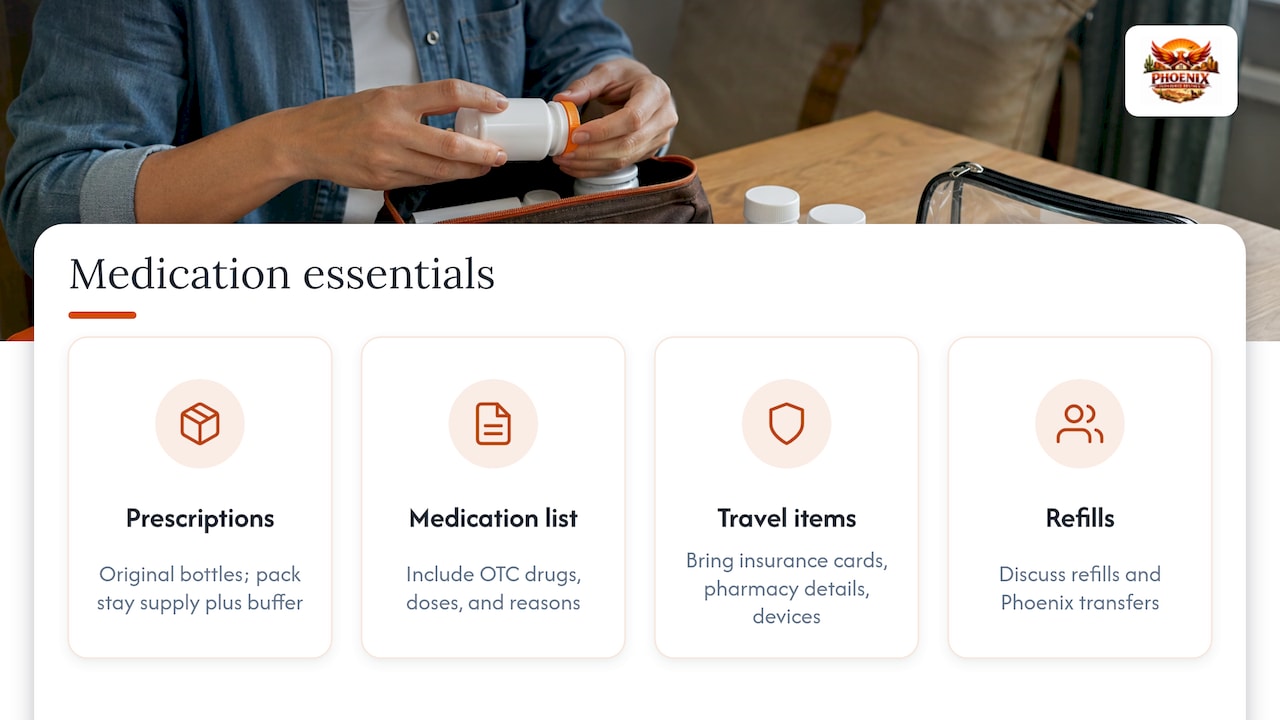
Bring enough of every prescription for the planned stay, with a buffer for delays. The CDC’s Pack Smart guidance recommends keeping prescriptions in their original bottles. Also bring a written list of all your medications, including over-the-counter drugs and supplements, with doses and the reason you take each one. Mayo Clinic’s checklist also suggests carrying your insurance cards, your pharmacy details and any assistive devices you use, such as glasses or hearing aids.
If you have a chronic condition or take medicine regularly, talk to your doctor or pharmacist before you leave about refills and about transferring a prescription to a Phoenix pharmacy for a long stay. Your own healthcare professional is the right person to tell you what else to bring for your situation.
A small first aid kit
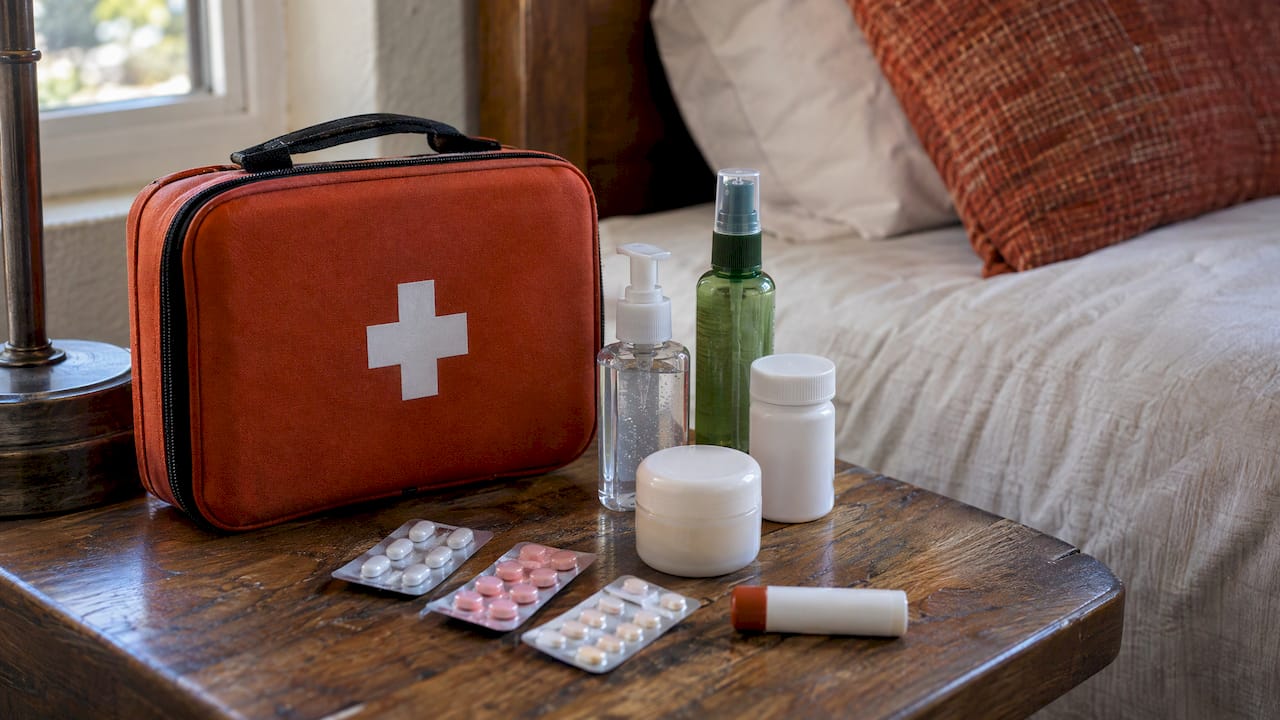
The CDC Yellow Book says all travelers should bring a personal first aid kit so they can manage common minor illnesses and injuries, and recommends keeping medicines and supplies in a durable, water-resistant container that is easy to reach. The CDC’s Pack Smart page lists items such as pain and fever medicine, antihistamines, antacids, hand sanitizer with at least 60% alcohol and insect repellent. For Phoenix, add lip balm and a good moisturizer, since the air is very dry.
Kitchen items and a pantry starter kit
A fully equipped kitchen should cover the basics. Our guide to the checks that define a fully equipped kitchen lists what to confirm: pots, pans, knives, a coffee maker, a blender or toaster, and enough dishes for your household. What you add is about taste and speed.
Worth bringing:
- A sharp chef’s knife in a blade guard and a small cutting board
- Your favorite spices in small containers
- A reusable water bottle and a travel coffee mug
- Ground coffee or tea bags, and a reusable filter if you use one
- Reusable zip bags and a few clip-top containers for leftovers
- A foldable tote for grocery runs
A day-one food kit. Wirecutter’s guide to first-week moving essentials recommends no-prep snacks such as fruit and nuts, baby carrots and hummus or granola bars, plus paper towels, a can opener, dish soap, a sponge, and trash bags. Pack a few of these so your first evening does not depend on finding an open store.
Leave at home: large appliances, full sets of cookware, glassware and bulky pantry items. If the inventory lists them, you do not need them.
Work gear and remote-work setup
If you are working from your rental, your packing list should treat the workspace like an office. Pack:
- Laptop, charger and a second charger for your bag
- A portable monitor or laptop stand if you work long hours
- A wireless mouse and keyboard
- Noise-canceling headphones and a headset for calls
- A power strip with surge protection
- A short ethernet cable and a USB-C hub
- A notebook, pens and a small label maker or sticky notes
Do not assume the Wi-Fi is enough for video calls. Our five tests for remote work rental amenities walks through how to confirm internet speed and a usable desk before you arrive, and the guide on verifying a separate office explains what a real workspace looks like compared with a kitchen counter.
Documents and paperwork to carry
Keep these in your carry-on, not in checked luggage:
- Government photo ID and a passport if you are traveling internationally
- Lease or booking confirmation, and the host’s contact information
- Health insurance card and prescription card
- A list of medications with doses
- Employer or assignment letter, if your stay is tied to a relocation or contract
- Vehicle registration and proof of insurance, if you are driving
- Copies of important documents saved in a secure cloud folder
This Old House also suggests labeling your belongings, which helps when you pack up at the end of the stay. If you are curious how the paperwork on our side works, the lease process from application to move-in lays it out step by step. For stays near the 30-day mark, it also helps to understand how the 30-day cutoff shapes midterm rentals.
What to add for a month-long stay (and longer)
Once a trip passes two weeks, the small frictions add up. These are the items people tend to wish they had by week three:
- A few home touches. A photo, a small plant-free decoration or a favorite throw blanket makes a unit feel lived in.
- Cleaning basics. A small bottle of all-purpose cleaner and a pack of microfiber cloths. Dish towels and sponges are often the things a host does not stock.
- Exercise gear. Resistance bands, a yoga mat or running shoes, since you have time to build a routine.
- Entertainment. A tablet loaded with downloads, a book, a deck of cards.
- A small toolkit. A screwdriver, tape and a multi-tool for the odd fix, such as a wobbly shelf.
- An umbrella or light rain jacket for the monsoon season.
- A seasonal wardrobe check. Look at the forecast for the month, not the week you land.
Packing for Phoenix weather and city life
Phoenix has two very different packing seasons. According to Visit Phoenix, winter highs sit in the 60s and 70s, and desert nights and mornings can get chilly. The same page lists average highs of 104 to 106 degrees Fahrenheit in June through August, with average lows in the 70s and low 80s.
| Season | What to add |
|---|---|
| Winter (December to February) | Light jacket, long sleeves for evenings, sunscreen, sunglasses |
| Spring and fall | Layers, a hat, a refillable water bottle |
| Summer (June to August) | Breathable fabrics, a wide-brim hat, electrolyte packets, sun-protective clothing |
Sunscreen is year-round. The CDC recommends sunscreen with UVA and UVB protection and an SPF of 15 or higher, and many people choose a higher SPF for long days in the desert sun.
Neighborhood notes that change what you pack
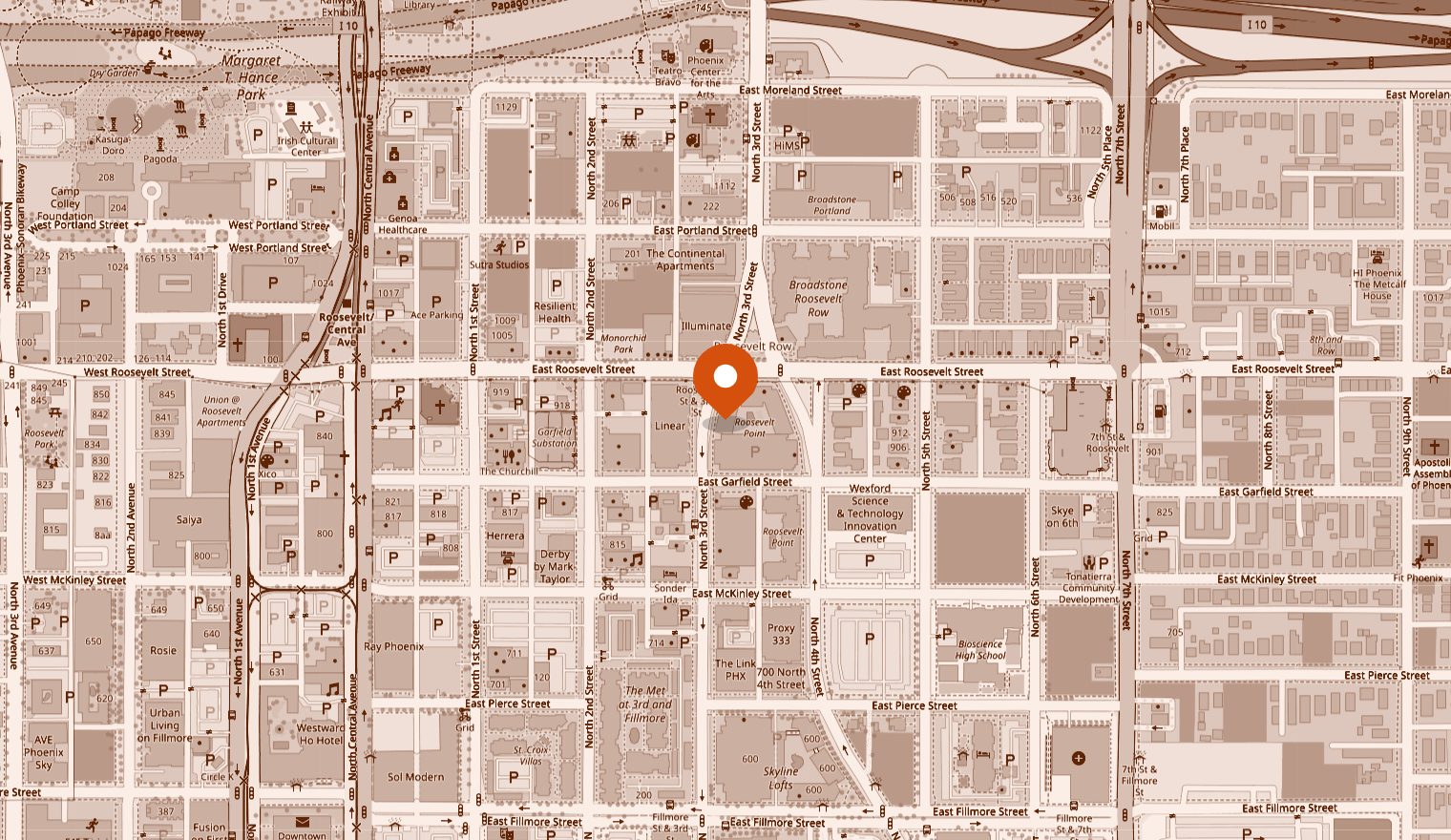
- Downtown Phoenix and Roosevelt Row. Walkable, with galleries, restaurants and the light rail close by. Pack comfortable walking shoes and skip the car-heavy gear. Most people here shop on foot or by rideshare, so a foldable tote helps.
- Biltmore. An office and resort area northeast of downtown. If your assignment is here, bring business attire and check commute times by car.
- Tempe. Home to Arizona State University and Mill Avenue, reachable by light rail. Bring a bike lock if you plan to cycle.
- Scottsdale. Resort and dining culture. Pack a few dressier items for evenings.
- Hospital districts. Travel nurses and medical staff often pick a place near a medical campus. Pack scrubs, supportive shoes, compression socks and a lunch bag for long shifts.
If your travel dates fall in winter, our snowbird rentals in Phoenix page covers the multi-month stays that suit the season.
Traveling with a pet
If a pet is coming along, pack their records and bring their own bed, bowls, leash, waste bags and a supply of food. Ask the host ahead of time about pet policies for midterm furnished rentals and fees, and see our guide to pet-friendly midterm rentals for corporate travelers. In summer, plan walks for early morning or after dark.
What not to pack
- Furniture, lamps and rugs
- Full cookware and dish sets
- Large toiletry bottles if you are flying
- Irreplaceable valuables and bulky jewelry
- Duplicates of what the inventory already lists
Check the house rules before you bring items that might be restricted, such as candles, grills or extra guests’ belongings.
A simple four-step packing routine
- Two weeks out: get the written inventory and the house rules.
- One week out: lay out clothing for seven days and count your shoes.
- Three days out: gather medications, documents and chargers in one bag.
- Day of travel: put medications, documents, a charger and one change of clothes in your carry-on.
After you arrive, do a short walk-through, note anything missing, and make a grocery and household supply list for your first week.
Our perspective
We run furnished lofts in downtown Phoenix, and the question guests ask us most before arriving is what they can leave at home. Our answer is nearly everything. Our units are designed around turnkey move-in: fully equipped kitchens, in-unit laundry, workspaces and WiFi, so you arrive with a suitcase and not a moving truck.
What we see makes a stay feel settled is not extra stuff. It is the right few things: your own pillow, a knife you trust, your medications, your work setup. A furnished rental beats a hotel on the kitchen and the laundry, and it beats an empty apartment because you skip buying and later hauling away furniture.
Our advice is to ask for the inventory, then pack to fill the gaps. We are happy to answer questions before you book.
Sean
Ready to book a furnished stay in Phoenix?
If you want to pack light, a furnished loft does most of the work for you. Our downtown Phoenix lofts come with fully equipped kitchens, in-unit laundry, workspaces and WiFi, with flexible booking for short and midterm stays.
See the available Phoenix lofts and check availability for your dates, or browse our monthly furnished rentals and corporate housing options.
FAQ
How many clothes should I pack for a month-long rental?
Pack about one week of clothing and plan to do laundry weekly. Add two or three extra pairs of underwear and socks as a buffer in case a wash day slips. If your unit has in-unit laundry, this approach works for stays of several months.
Do I need to bring sheets and towels to a furnished rental?
It depends on the host, so ask for the inventory. Many furnished rentals supply linens, but bringing your own pillow, a sheet set or at least two bath towels is a common choice on longer stays. Confirm the bed size before you pack sheets.
What kitchen items are worth bringing?
Bring a sharp chef’s knife, a small cutting board, your favorite spices and your coffee or tea. The unit should already have cookware, plates and appliances. Our guide to fully equipped kitchens explains what to confirm.
Can I bring my medications in my carry-on?
Yes. The TSA exempts medications from its 3.4-ounce liquid limit, and the CDC recommends keeping prescriptions in their original bottles. Bring a written list with doses, and ask your healthcare professional about refills for a long stay.
What should I pack differently for Phoenix in summer?
Choose breathable, light-colored clothing, a wide-brim hat, sunscreen and a refillable water bottle. Average summer highs run above 100 degrees Fahrenheit, so plan outdoor errands for early morning or evening.
Sources
- Temporary Housing Moving Tips, This Old House
- Pack Smart, CDC Travelers’ Health
- Travel Health Kits, CDC Yellow Book
- Liquids, Aerosols, and Gels Rule, TSA
- Your Mayo Clinic packing checklist
- First-week moving essentials, Wirecutter
- Phoenix weather by month, Visit Phoenix
Leave a Reply