
Call your claims adjuster or ALE coordinator today and ask for written authorization for a furnished rental, giving your move-in dates plus any family and pet needs. Phoenix absorbed rentals at a record pace in early 2026, so good units go fast, according to Marcus & Millichap. For longer stays, a furnished rental may offer more space, a kitchen, and laundry than a hotel.
TL;DR:
- Choose a furnished rental for longer repairs, children, pets, or remote work; hotels are the quickest fallback when no suitable unit is available.
- Insurers may reimburse bookings or arrange housing through a vendor, but they can limit eligible costs and duration, so confirm both before committing.
- If vendor placements trigger repeated moves, request a stable unit or ask whether a cash out is available, with cutoff dates and terms documented.
- Before booking, verify the rate, lease or hold terms, incidentals, cancellation rules, pet fees, laundry, internet, and accessibility, then photograph every room on arrival.
- Standard Phoenix multifamily asking rents are about $1,150 for studios and $1,535 on average; furnished rental rates cost more than unfurnished leases.
Table of Contents
- Which temporary housing option should you choose first?
- How do insurers and vendors usually arrange ALE housing?
- What steps should you take with your adjuster and ALE vendor?
- What should you confirm inside a furnished unit?
- Why is Phoenix housing availability so tight?
- What helps most when you’re displaced?
- How we can help you secure a furnished unit
- FAQ
- Sources
Which temporary housing option should you choose first?
You have several categories to consider, and the right one depends on your household and your repair timeline.
- Hotel or extended-stay hotel: A flexible option when you need lodging quickly.
- Furnished or corporate rental: A fully equipped home or apartment with a full kitchen, laundry, and room to work.
- Short-term lease: An unfurnished or lightly furnished unit on a fixed term, which means you must supply your own furniture.
Prioritize a furnished rental if you have children, pets, a work-from-home job, or an extended repair timeline. Cooking your own meals and washing clothes at home takes real pressure off a displaced family. Our own comparison of corporate housing and hotels walks through why long stays tilt toward furnished units.
Hotels remain the fastest fallback when you need a bed tonight and nothing furnished is open yet. For a broader look at matching stay length to housing type, this hotel versus apartment guide is a useful read.
How do insurers and vendors usually arrange ALE housing?
Insurers handle Additional Living Expense (ALE) housing in different ways. Some reimburse you after you book and pay. Others assign a vendor that books the lodging and sends invoices directly. Either way, the insurer must authorize the housing and can set reasonable limits on cost and duration, so you want those terms in writing before you commit.
Vendor placements can create friction. Moves between properties, lodging far from your home, and disputes over incidental charges all show up in practice. A federal court filing in an Arizona homeowner dispute documents a family moved multiple times by insurer-assigned vendors, with lockouts and billing disputes at hotels.
The record shows how it ended: the family eventually received a mix of hotel payments, advances, long-term rental arrangements, and a cash payment, per the court file.
What you can do about it:
- Ask early for a stable, longer-term unit so you avoid repeated moves.
- Ask whether the insurer offers a cash-out alternative to vendor housing.
- Confirm any cutoff dates and cash-out terms in writing.
- Keep every vendor message in one folder.
What steps should you take with your adjuster and ALE vendor?
Work through this sequence in order, and save a copy of everything.
- Call your adjuster or ALE coordinator. Confirm that housing is authorized, the covered dates, the vendor’s name, and how billing works.
- Request written approval. Ask for the authorized housing period and any per-night or monthly rate ceilings in an email or letter.
- Collect your paper trail. Save booking confirmations, invoices, pre-authorization emails, incidental receipts, and every vendor message.
- Address repeated moves right away. If you are relocated more than once, ask for a written justification and request a stable unit or a cash-out.
- Choose and confirm the unit. Share the unit’s rate, lease or hold terms, and invoice policy with your adjuster before you book, so approval is documented.
Pro Tip: Use neutral, factual language in writing, such as “Please confirm in writing the authorized dates and nightly or monthly rate for my furnished housing,” so your request is easy to approve and easy to cite later.
What should you confirm inside a furnished unit?
Use this list during a walk-through or when reviewing an insurer-offered unit. Our room-by-room checklist and amenities list go deeper if you want a printable version.
- Kitchen: Working refrigerator and stove, basic cookware, and a full set of dishes and silverware.
- Bedrooms and living areas: The right number of beds, clean linens, secure locks, and working smoke detectors.
- Laundry and work needs: In-unit or on-site laundry, strong Wi‑Fi, and a desk or workspace.
- Billing and contract: Who pays incidentals, deposit and hold policies, cancellation terms, length of stay, and how extensions work.
- Pets and accessibility: Pet policies and fees, elevator or ground-floor access, and parking.
Photograph every room at move-in. Those images protect your deposit and back up any later conversation with the insurer.
Why is Phoenix housing availability so tight?
Demand has outrun supply lately. Kidder Mathews’ Phoenix multifamily report shows decreased vacancy and absorption exceeding new deliveries, which means fewer open units at any moment.
Sample asking rents run around $1,150 for studios and near $1,535 on average, per Kidder Mathews. Those are standard multifamily figures. Furnished mid-term rates cost more than an unfurnished lease because the unit comes equipped, but they often work out better than nightly hotel pricing once you pass a week or two.
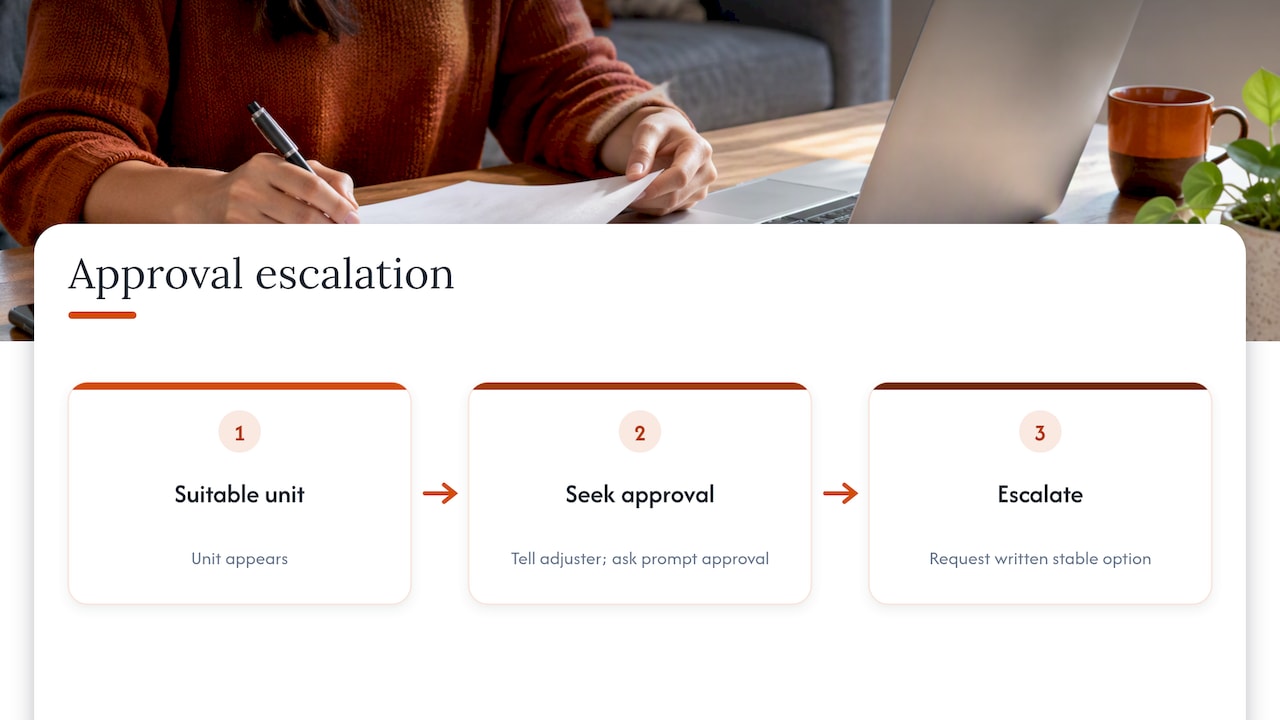
In practice, a reasonable offer can disappear quickly. If a suitable unit appears, tell your adjuster you intend to book it and ask for approval promptly. If availability keeps pushing you into new placements, escalate to your adjuster and request a stable option in writing. Our guide to booking monthly rentals covers timing, and our explainer on mid-term rental timing explains how stay length can affect your choices.
What helps most when you’re displaced?
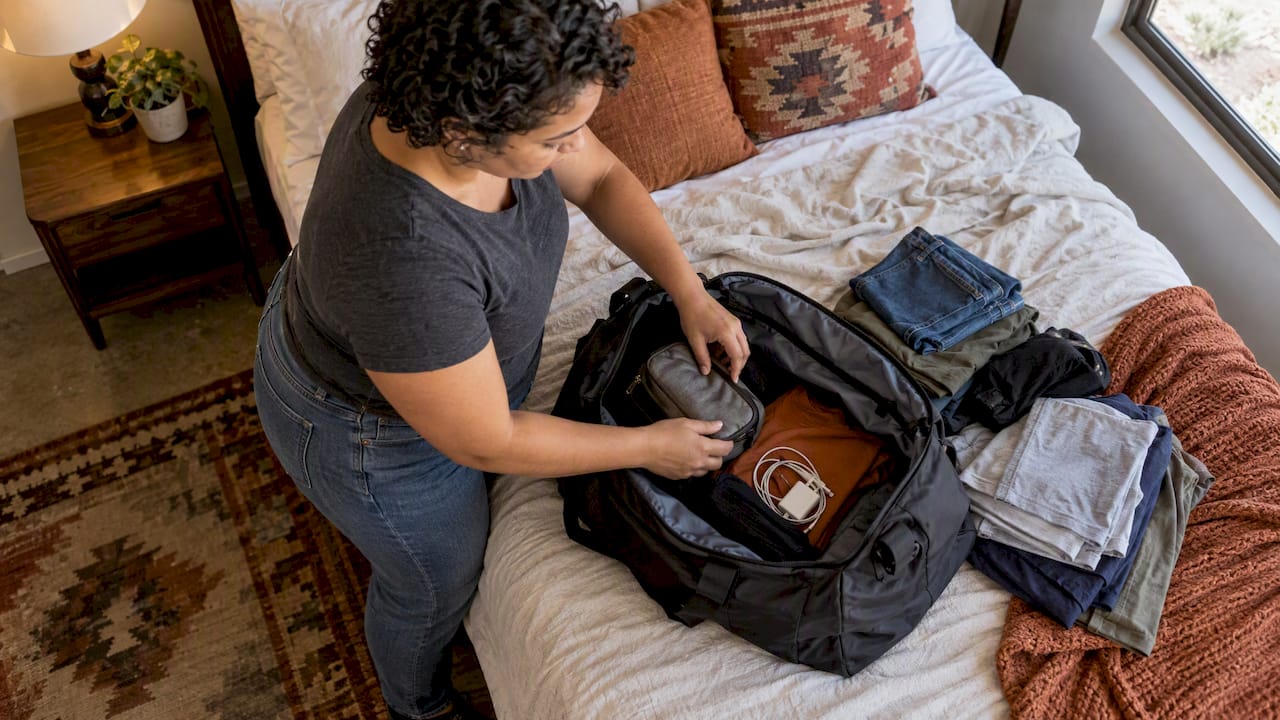
I have seen the same pattern many times: families often do best when they treat the initial period as logistics, not limbo. Pack an essentials bag before the move: medications, chargers, work gear, and a few days of clothes. Ask the vendor or insurer exactly which incidentals they cover before you spend anything.
For longer stays, furnished rentals can be more comfortable than hotels because you get a kitchen, laundry, and room to spread out. That changes daily life more than most people expect. Eating at home and keeping a routine matter when you are already stressed.
Finally, treat paperwork as part of the move. Get approvals in writing, keep every invoice, and send copies to your adjuster as you go. Reimbursement moves faster when your records are complete.
— Sean
How we can help you secure a furnished unit
When you need a comfortable place while your home is repaired, we offer fully furnished lofts in downtown Phoenix with flexible nightly and monthly stays, pet-friendly options, in-unit laundry, Wi‑Fi, and workspaces.
When you ask your insurer for approval, include these items:
- Our booking confirmation
- The nightly or monthly rate
- The lease term or hold policy
- Our invoice and payment policy
Browse our available lofts on our properties page to pick a unit, then contact us through our website and we will send the documentation your adjuster needs.
FAQ
What is insurance housing in Phoenix?
It is temporary housing paid through your policy’s Additional Living Expense coverage when an insured loss makes your home unlivable. Your insurer must authorize it, and it generally covers reasonable costs while repairs are underway.
Is a furnished rental better than a hotel after a loss?
For longer stays, usually yes. A furnished rental gives you a kitchen, laundry, and more space, which helps families, pet owners, and remote workers.
How do I get my insurer to approve a furnished rental?
Call your adjuster, request written authorization, and share the unit’s rate, lease or hold terms, and invoice policy. Keep every email and receipt so reimbursement is straightforward.
Can I ask for a cash-out instead of vendor housing?
Some insurers offer one, and a documented Arizona dispute included a cash payment. Ask your adjuster whether it is available, and confirm the terms and cutoff dates in writing.
Sources
- Marcusmillichap
- Case 2:24-cv-00230-ROS Document 87 Filed 09/09/25 Page 1 of 17
- Phoenix Multifamily Market Report | Q3 2026 | Kidder Mathews
Recommended
- Phoenix Furnished Rentals Lease Process: Your Complete Application to Move-In Guide
- Avoid Denials: 3 Credit Check Questions for Phoenix Furnished Rentals
- How to Book a Phoenix Furnished Rental in Minutes: Our Simple 5-Step Process
- 7 Reasons Phoenix Furnished Rentals Outperforms Competitors for Downtown Monthly Housing
Leave a Reply