
If your Phoenix home or apartment is being renovated and you need somewhere to live in the meantime, a furnished rental booked by the month is usually the most practical answer. It gives you a kitchen, laundry, a place to work and no long lease, and you can extend or leave as the construction schedule moves. This guide covers how to choose, how to get the cost covered when possible, what Arizona law does and does not give you, and how to move twice without losing your mind.
TL;DR
- Renovations nearly always run longer than quoted, so pick housing with monthly or flexible terms rather than a fixed lease.
- Arizona’s landlord-tenant law does not guarantee tenants relocation money for renovations. Read your lease and the notice you received before assuming anything.
- If a covered loss (such as fire or water damage) made your home unlivable, your homeowner’s or renter’s policy may pay for temporary housing. Get approval in writing first.
- Furnished lofts and apartments with in-unit laundry and a full kitchen usually beat hotels once you pass a week or so, especially with kids, pets or a work-from-home job.
- Peak season runs late October through April, so book early if your project overlaps winter.
Table of Contents
- Who needs temporary housing during a renovation
- How long will you really need?
- Your options compared
- What to look for in a furnished rental during a remodel
- Timing: Phoenix has a peak season
- Tenants: what Arizona law does and does not give you
- Homeowners: when insurance pays for housing
- A budgeting example
- Our perspective: plan for the second move, too
- Make the move itself easier
- Where to stay in downtown Phoenix
- Questions to ask any provider before you book
- FAQ
- Sources
Who needs temporary housing during a renovation
The phrase covers several different situations, and the right answer depends on which one is yours.
Homeowners doing a planned remodel. Kitchen and bathroom gut jobs, flooring, whole-house updates and additions can leave a house with no working water, no kitchen or a layer of dust on everything. Many people try to stay through it and give up by week two. If you are paying a contractor, the timeline is the number to ask about, and then add a buffer.
Homeowners after a loss. After a fire, a burst pipe or storm damage, the work is a repair rather than a choice, and the housing may be covered by your insurer. That changes how you book and what paperwork you keep.
Tenants whose building is being renovated. Landlords in Phoenix sometimes renovate occupied buildings. Whether you must leave, and whether anyone pays for your housing, depends on your lease and the notice you received. More on this below.
Landlords and investors. If you are renovating a rental between tenants, you may need housing for yourself or for a manager who is on site daily.
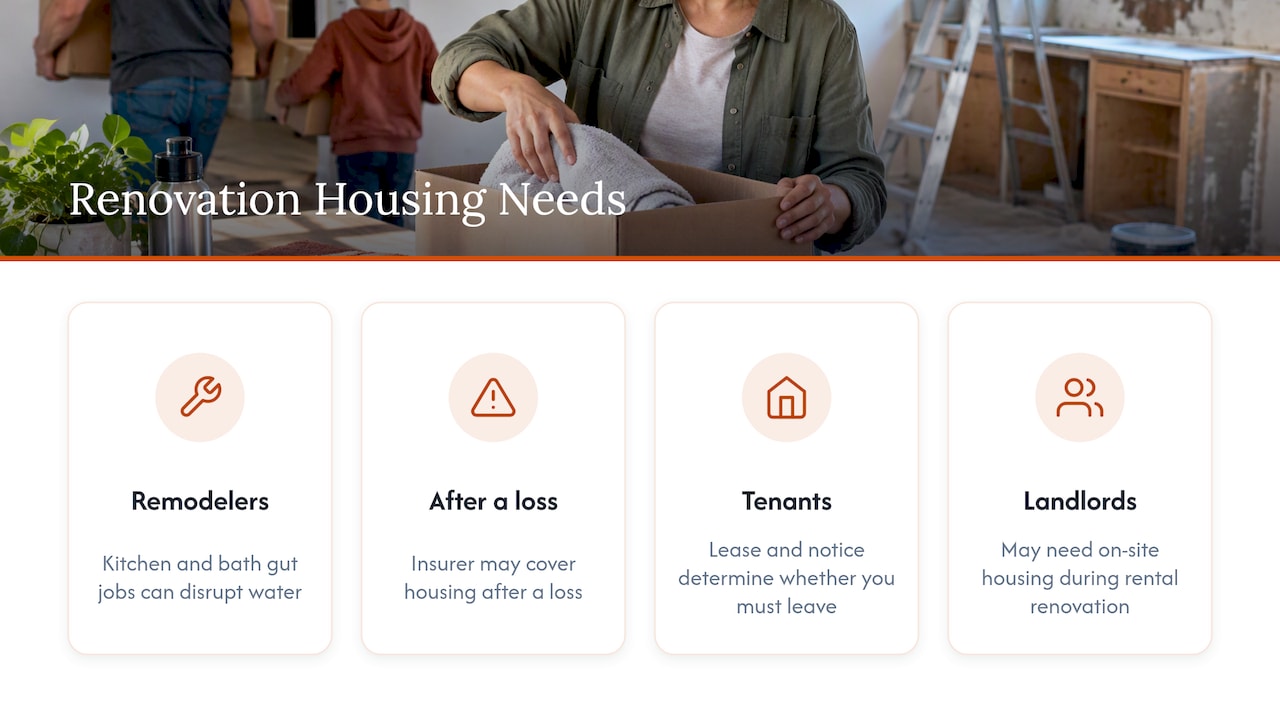
In every case the core need is the same: a comfortable, fully equipped place for an uncertain number of weeks, close enough to the project that you can check on it.
How long will you really need?
Be skeptical of any renovation schedule that has no slack. Permitting, material delays and hidden problems behind walls (old plumbing, wiring, termite or water damage) are common reasons a two-week job becomes six. A reasonable approach:
- Ask your contractor for the realistic range, not the best case.
- Book housing for the likely duration, not the optimistic one.
- Choose a place that lets you extend without re-negotiating or moving rooms.
That third point is where furnished rentals earn their keep. A traditional apartment lease usually runs 12 months, which is a poor match for a 7-week project. Hotels are flexible but costly over time and rarely have full kitchens or laundry. A monthly furnished rental sits in the middle. We explain how the 30-day line changes the rules in our piece on mid-term rentals in Phoenix.
Your options compared
We describe these by type, since the right fit depends on your household, not on a brand.
| Option | Best for | Strengths | Watch out for |
|---|---|---|---|
| Hotel | Under a week | No setup, daily service | Cost adds up, no real kitchen, little space for pets or kids |
| Extended-stay hotel | 1 to 4 weeks | Kitchenette, weekly rates | Small rooms, shared laundry, limited character |
| Furnished loft or apartment, monthly | 3 weeks to several months | Full kitchen, in-unit laundry, workspace, flexible terms | Book early in peak season |
| Traditional unfurnished lease | 12 months or more | Lowest long-run monthly cost | Lease length, moving your own furniture, deposits |
| Staying with family or friends | Short gaps | Free | Strains relationships fast, no privacy |
If you are weighing cost, our page on furnished versus unfurnished rentals walks through the break-even math, and the comparison of corporate housing and hotels for long stays shows where the hotel advantage ends.
What to look for in a furnished rental during a remodel
Living away from a construction zone is stressful enough. The right place removes small frictions.
- A real kitchen. If your own kitchen is the thing being torn out, cooking is the first routine you lose. Look for full-size appliances, cookware and dishes, not just a microwave. Our room-by-room amenities list shows what to ask a provider to confirm.
- In-unit laundry. Dust and drywall residue get into clothes. Laundry on site saves hours.
- Workspace and WiFi. If you work from home, you cannot afford to lose a week of productivity because the new place has a dining table and weak internet.
- Pet policy. Dogs and cats are often the hardest part of a temporary move. Confirm what is allowed before booking. See our note on pet-friendly midterm rentals.
- Air conditioning that works. In Phoenix this is not a luxury. The city’s own guidance on landlord duties notes that a landlord must supply reasonable cooling where air conditioning is installed or offered, so ask how a provider handles a failed unit.
- Location. Close to your project means quick checks on the contractor. Close to your work or your kids’ school means a normal routine. You rarely get both, so decide which matters more.
- Terms that bend. Ask how extensions work, what notice is needed to leave early and whether the rate changes.
Before you sign anything, our furnished apartment checklist covers what to inspect and what to get in writing.
Timing: Phoenix has a peak season
Phoenix housing demand is seasonal. Late October through April is the busy stretch, when winter visitors fill the Valley, and summer tends to be softer on price because of the heat, according to one seasonal overview of the Phoenix climate and demand cycle. A guide for Canadian winter visitors reports that furnished two-bedroom seasonal rentals commonly run $1,500 to $5,000 a month depending on location and amenities, and recommends booking ahead.
What that means for you: if your renovation starts in November, do not wait until the week demolition begins. If it starts in summer, you have more choice and may have more room to negotiate. Our own guidance on when to book a monthly rental gives the lead times we see for events and off-season stays.
Market conditions matter too. One regional report says Phoenix absorbed 5,752 apartment units in the first quarter of 2026, the strongest quarter in ten years, so demand is real even where new supply has arrived.
Tenants: what Arizona law does and does not give you
This is the part people most often get wrong, so read it carefully, and talk to a professional if real money is at stake.
If you rent and your landlord plans a renovation, the first question is whether you are being asked to leave temporarily, or your lease is simply not being renewed. Those are different legal situations. A general overview from a legal publisher on displacement due to building renovations in Arizona notes that renovations range from cosmetic updates to extensive structural work, and that the details of your rights depend on the circumstances.
Some points to check:
- Your lease. Look for clauses about entry, repairs, relocation and early termination. A lease can promise more than state law requires.
- Your notice. Keep every written notice. The dates matter.
- The state statute. The Arizona Residential Landlord and Tenant Act, published by the Arizona Department of Housing, is the baseline. It focuses on habitability and the remedies for specific failures rather than a general right to relocation payments. It does not let you withhold rent to force repairs.
- Mobile and manufactured homes. These have a separate path. The state’s Relocation Fund helps with moving a home when a park closes or is redeveloped, among other triggers.
If you think your landlord is forcing you out improperly, a tenant legal aid organization or a licensed Arizona attorney can read your lease and notice. We are a housing provider, not a law firm, and this section is a map, not advice on your case.
One more practical point: the city is under pressure on supply. Phoenix’s own housing needs assessment reports a shortage of 59,000 affordable units for households at or below 50% of area median income. If you are displaced from a long-term rental, start looking early, because replacement housing is not always easy to find.
Homeowners: when insurance pays for housing
If the renovation follows a covered loss, your policy may include what insurers call additional living expenses (ALE), sometimes called loss of use. In general terms, it can help with the extra cost of living elsewhere while your home is being repaired. Limits, time caps and what counts as covered vary by policy, so the only reliable answer is in your own documents and from your adjuster.
Some habits that prevent headaches:
- Call your insurer or agent before you book, not after.
- Ask what is covered (housing, extra meals, pet boarding, laundry) and for how long.
- Get approval in writing, and keep every receipt and the rental agreement.
- Ask whether the insurer pays the provider directly or reimburses you.
- Compare like with like. A furnished two-bedroom with a kitchen may cost less overall than a hotel suite plus restaurant meals, and that is the case an adjuster usually wants to see.
We have a page written for exactly this situation: getting a furnished rental approved in writing for ALE housing in Phoenix.
A planned remodel that you chose to do, such as new cabinets or a bigger bathroom, is typically not a covered loss, so assume you are paying yourself and budget accordingly.
A budgeting example
Here is a simple way to frame the cost, using hypothetical numbers only to show the method, not actual prices.
Suppose your kitchen remodel is quoted at five weeks. Plan for eight. Then list what you will spend during those eight weeks in each scenario:
- Hotel: nightly rate, parking, and every meal out.
- Extended-stay hotel: weekly rate, parking, and most meals out.
- Furnished rental: monthly rate, utilities if not included, and groceries.
The gap that tends to decide it is food. Cooking at home in a rental often offsets a large share of the higher base rate over several weeks. Add pet boarding if your dog cannot stay in a hotel, and the comparison shifts further. Run the numbers with your own quotes, and ask each provider what is included in the rate.
Our perspective: plan for the second move, too
We talk with a lot of guests who are between homes, and one thing stands out. People plan the first move and forget the second. They find a place for the demolition phase, then discover that the project ends on a Friday, the lease ends on the Wednesday before, and the house is not ready for furniture.
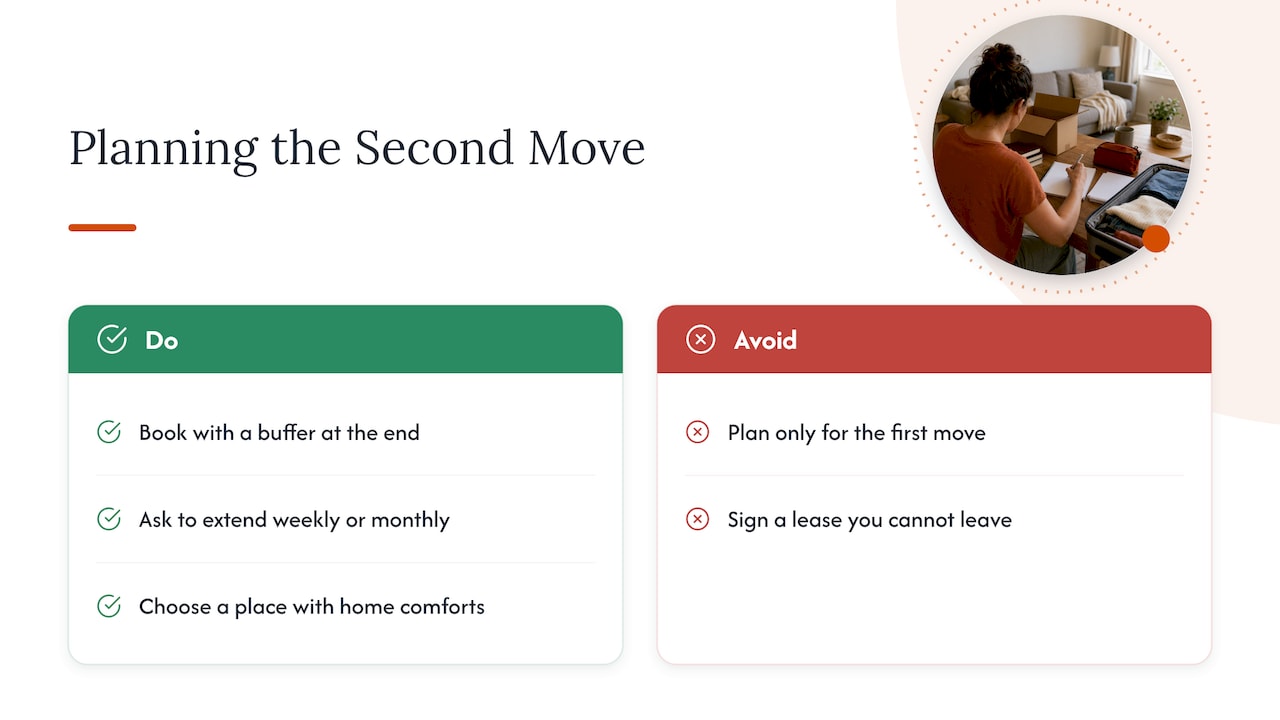
Our advice is plain. Book with a buffer at the end, not just the beginning. Ask for terms that let you extend by the week or the month. Choose a place that feels like a home rather than a holding pen, because if the schedule slips you will be glad of a real kitchen, a quiet corner to work and laundry you do not have to leave the building for. Our lofts in downtown Phoenix are built around that idea: fully equipped kitchens, in-unit laundry, workspaces and WiFi, with flexible booking policies and pet-friendly options.
The other thing we would say is to be honest about the stay. A renovation you expected to last three weeks and that goes to three months is not unusual, and the people who cope best are those who never signed a lease they could not leave.
— Sean
Make the move itself easier
Two moves in a few months is a lot. Moving your belongings to storage, pulling out only what you need for the rental, then bringing everything back is the real workload of a renovation. If you are shifting furniture out of rooms that will be torn up, apartment moving services that handle packing and labeling can save you from lost boxes and damaged pieces, and labeled boxes make the return trip much faster.
A short list to keep it simple:
- Pack one “first week” bag for the rental and a separate set of essentials for the work-from-home setup.
- Photograph rooms before anything is moved, which helps if you file an insurance claim.
- Keep important documents, medications and chargers with you, never in the moving truck.
- Ask your contractor which rooms must be fully empty and which can hold covered furniture.
- Set up mail forwarding or a hold for the project duration.
Because the rental is furnished, you do not need to move beds, sofas or a table. That is a large part of the saving.
Where to stay in downtown Phoenix
If you want a central base with the feel of the city rather than a generic complex, our furnished lofts offer short and mid-term stays in downtown Phoenix. The collection includes the Roosevelt Row Loft and the Scholars Loft, along with other units suited to singles, couples and larger households. Rates vary by unit and dates, so check the properties page or our main site for what is available for your window.
If your renovation is near a medical campus, or someone in your household works in healthcare, we also have location pages for housing near Banner University Medical Center and St. Joseph’s Hospital.
Questions to ask any provider before you book
- What is the minimum stay, and what happens if I need to extend?
- What is the cancellation or early departure policy if my project finishes sooner?
- What does the monthly rate include: utilities, WiFi, parking, cleaning?
- What is the pet policy, and are there pet fees or deposits?
- Can you provide an invoice or letter my insurer will accept?
- Who do I call if the air conditioning or appliances fail?
- Is the unit actually furnished and stocked as pictured, with a written inventory?
Providers who answer these clearly in writing are usually the ones who will be easy to deal with in week six.
FAQ
How long can I rent a furnished place during a renovation?
It depends on the provider and the unit, but monthly furnished rentals are designed for stays of a month or more, and many allow extensions subject to availability. Ask about extensions before booking, and remember that peak season from late October to April can limit availability.
Does my landlord have to pay for my housing if the building is being renovated?
Not automatically. The Arizona Residential Landlord and Tenant Act centers on habitability and specific remedies, and it does not allow withholding rent to force repairs. Your lease or your written notice may offer more, so read both and consider asking a tenant legal aid group or an Arizona attorney.
Will insurance cover temporary housing during repairs?
If the work follows a covered loss, your policy may include additional living expenses coverage. Limits and conditions vary, so confirm with your insurer before you book and get approval in writing. A voluntary remodel is generally not a covered loss.
Is a furnished rental cheaper than a hotel for several weeks?
Often, once you pass about a week, because you can cook, do laundry and work in the unit. The answer depends on your dates, household size and the rate, so compare the total cost including meals and parking rather than the nightly or monthly figure alone.
Can I bring my dog or cat?
Some units allow pets and others do not, and fees differ. We offer pet-friendly options, but confirm the policy for the specific loft and your animal before you book.
Sources
- Phoenix air conditioning landlord guidance
- Seasonal overview of Phoenix climate and demand
- Guide for Canadian snowbirds in Phoenix
- Phoenix Q1 2026 market report
- Displacement due to building renovations in Arizona
- Arizona Residential Landlord and Tenant Act
- Arizona Department of Housing Relocation Fund
- City of Phoenix housing needs assessment
Leave a Reply