
The easiest housing for a traveling therapist in Phoenix is a furnished apartment or loft you can book by the month, with a kitchen, in-unit laundry, a real workspace and fast WiFi. Pick a place with a short, predictable drive to your facility. Make sure the lease can flex if your contract is extended or ends early. Downtown Phoenix and Roosevelt Row suit a lot of travelers because you can walk to restaurants and coffee, and the light rail is close by.
This guide is for traveling physical, occupational and speech therapists, respiratory therapists and behavioral health clinicians planning an assignment in the Valley. It covers where to look, what a monthly stay includes, how to compare real costs, and how winter changes the picture.
TL;DR
- Look for a furnished monthly rental with a lease length that matches your assignment, not a hotel stay or a 12-month unfurnished lease.
- Downtown Phoenix and Roosevelt Row offer walkable, transit-connected living. Phoenix is still a driving city, so check the commute to your facility before you book.
- Ask for one total monthly figure that includes rent, utilities, parking, pet charges and fees.
- Winter (November to April) is busy season in Phoenix, so reserve earlier than you would in summer.
- We offer furnished lofts in downtown Phoenix with equipped kitchens, in-unit laundry, workspaces, WiFi and flexible booking, with pet-friendly options.
Table of Contents
- What kind of housing works for a traveling therapist
- Where to stay: Downtown, Roosevelt Row and the rest of the Valley
- What a monthly furnished rental should include
- The questions to ask before you book
- How much does it cost, and what else gets added
- Lease terms: month-to-month, three months and longer
- Winter in Phoenix: snowbird season and your contract
- Traveling with a pet
- Our perspective
- Book a furnished loft for your assignment
- A simple plan for your first week of searching
- FAQ
- Sources
What kind of housing works for a traveling therapist
A therapy contract is a strange housing problem. You need a home for a few months, often with a start date that moves, and you may be working across clinics, schools, home health or a hospital. A traditional lease asks for twelve months and an empty apartment. A hotel gives you a bed but not a kitchen or a washing machine for months on end. Most traveling clinicians land in one of four options.
| Option | Best for | Watch for |
|---|---|---|
| Furnished apartment or loft, monthly | Contracts of one to several months, solo travelers or couples | Cleaning and deposit terms, parking, how the lease ends |
| Furnished room in a shared home | Tight budgets, short gaps | Shared kitchen and laundry, quiet hours, privacy for telehealth or notes |
| Extended-stay hotel | Very short or uncertain starts | Small kitchens, limited space to work or unwind |
| Unfurnished lease plus rented furniture | Contracts that may keep renewing | Setup time, two sets of bills, longer commitments |
For most therapists, the first row is the sweet spot. You arrive with luggage, find the dishes in the cupboard and the towels on the shelf, and start your first shift the next morning. We built our business around that experience: furnished lofts and apartments in downtown Phoenix for short and mid-term stays, with monthly lease options.
Where to stay: Downtown, Roosevelt Row and the rest of the Valley
Phoenix is spread out, and the right neighborhood depends on where you will actually work. Therapists often split their time between a main site and satellite clinics, so look at the whole week, not only your Monday address.
Downtown Phoenix
Downtown is the city’s urban core. It has restaurants, culture, housing, transit and a long list of employers, and it is described by local guides as walkable and transit-connected, with proximity to Banner–University Medical Center. If you want to leave the car parked on a day off, this is the area where that is realistic. For a clinician who spends the day on their feet, a short walk to dinner counts for a lot.
Roosevelt Row
Roosevelt Row is the arts district on the north side of downtown, known for murals, galleries, bars and coffee shops. It is a lively place to come home to after a long day of patient care. Our lofts here have a creative, industrial feel, which is the style we focus on. You can browse all of our available lofts to see which fit your taste and your commute.

Near specific hospitals and the airport
If your assignment is at a particular hospital, we have location guides that map out what is close:
- Housing near Phoenix Children’s Hospital, useful for pediatric therapists.
- Monthly rentals near Mayo Clinic Phoenix.
- Housing near St. Joseph’s Hospital.
- Traveling clinician housing near Phoenix Sky Harbor Airport, handy if you fly home often on days off.
Those pages were written with nurses in mind, but the logic is the same for therapists: a short, predictable commute and an easy route to the airport.
A note on commuting
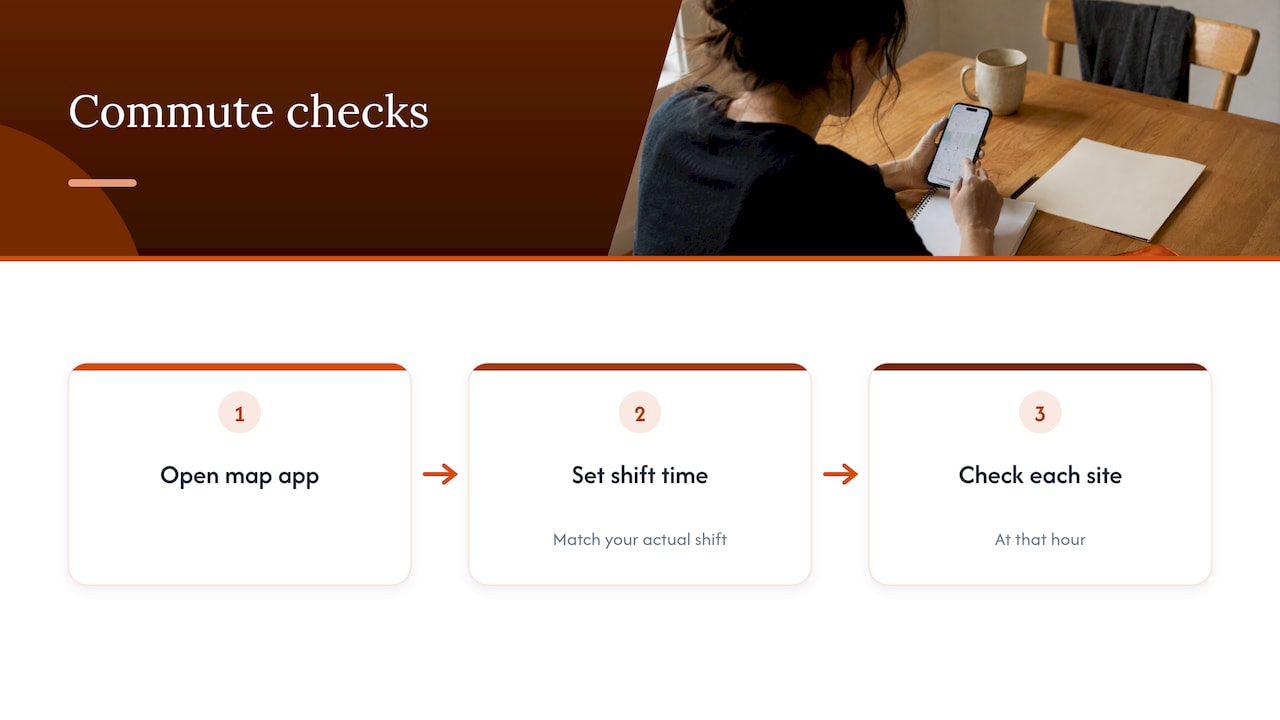
Local travel-housing guides caution that most Phoenix commutes involve driving, even from neighborhoods near the light rail. Treat any “ten minutes from the hospital” claim as a starting point. Open a map app, set a departure time that matches your real shift, and check the drive at that hour. Do this for each site if your caseload is spread out.
What a monthly furnished rental should include
When we talk with traveling clinicians, the same short list comes up. A good furnished rental for a multi-month stay should have:
- A fully equipped kitchen. Cookware, utensils, dishes and small appliances. Meal prep matters when your schedule is unpredictable.
- In-unit laundry. Scrubs and work clothes pile up quickly, and a shared laundry room in a building can be busy at the wrong times.
- A workspace. Documentation, continuing education, licensure paperwork and telehealth sessions all need a desk, a decent chair and good light.
- Fast, reliable WiFi. Ask for the actual speed, not just “WiFi included”.
- Comfortable bedding and blackout options. If you work early or rotate shifts, sleep is part of your job performance.
- Parking. Confirm that a space is dedicated to your unit, and find out whether it costs extra.
Our lofts are built around these basics: fully equipped kitchens, in-unit laundry, workspaces and WiFi, plus flexible booking policies. Amenities vary by property, so the property pages are the place to confirm what each loft offers.
The questions to ask before you book
An official state resource is a good guide here. The Arizona HousingSearch rental checklist tells prospective renters to look at rent, deposit and application fees. It covers who pays for electric, gas, water and sewer, whether pets are allowed, and whether the home has central air conditioning and laundry. It also mentions working locks, smoke and carbon-monoxide detectors, emergency maintenance and any visible water damage.
That list was written for renters in general, and it works well for a furnished stay too. Here is how we would adapt it for a traveling therapist.
- Get one total monthly number. Ask for rent, utilities, internet, parking, pet charges, cleaning and any other fee in one figure. That is the only way to compare two listings honestly.
- Ask what the utilities cover. Air conditioning is not a luxury in a Phoenix summer, and an included-utilities arrangement can make your monthly cost more predictable.
- Confirm the lease terms in writing. Find out the minimum stay, how extensions work, and what happens if your contract ends early or is canceled.
- Ask about the check-in process. If you arrive after a long drive or flight, self check-in can save you a wait.
- Check emergency maintenance. Find out who to call at night if something fails, and how fast you can expect a reply.
- Look at the building’s safety basics. Locks, detectors and well-lit parking are things you should be able to see on a tour, a video walkthrough or a clear photo set.
We provide clear information about each loft so you can answer these questions before you pay. If anything is unclear, ask our team before you book.
How much does it cost, and what else gets added
Monthly furnished rental costs in Phoenix vary with the neighborhood, size, season and length of stay. We do not publish nightly or monthly prices on this page, because the rate depends on the loft and your dates. The rate you see on the booking platform is the one to rely on.
For broader context, our guide to corporate housing budgets in Phoenix breaks down what drives the range. The same factors apply to a therapist booking a monthly stay: unit size, location, amenities and timing.
When you compare listings, line up the same items for each:
| Cost item | What to ask |
|---|---|
| Monthly rent | Is the rate the same for one, two and three months? |
| Cleaning fee | One-time or recurring? Is mid-stay cleaning available? |
| Deposit | Amount, and when and how it is returned |
| Utilities | Electric, water, gas, trash and internet: included or billed? |
| Parking | Included, or an extra monthly charge? |
| Pets | Deposit, monthly pet rent, limits on size or number |
| Taxes | Whether local lodging taxes apply to your stay length |
The lowest advertised rent is not always the lowest total cost. A cheaper unit that charges for parking, utilities and cleaning can end up costing more than a loft that includes them.
If part of your compensation is a housing stipend, talk to your recruiter or a tax professional about how it works. Tax rules depend on your individual situation, and the right person to answer is a qualified tax advisor, not a housing website.
Lease terms: month-to-month, three months and longer
Traveling therapists tend to book in one of three patterns.
- Month-to-month. The most flexible choice if your start date or contract length is uncertain. You can extend one month at a time.
- A fixed block of a few months. A good fit when your contract has a set end date. It often gives you a steadier rate and fewer renewals to manage.
- Winter or multi-month stays. Longer bookings make sense when you want a full season in the Valley.
If you are new to this, our explainer on what counts as a mid-term rental covers how stays of about a month and longer are treated differently from short vacation bookings. For short gaps between assignments, our short-term rentals work well, and for longer assignments our extended stay lofts are built for it.
One practical tip: start looking early, and tell us your likely extension window. Our page on when to book monthly rentals explains how far ahead to plan around busy periods and how short the lead time can be in the off-season.
Winter in Phoenix: snowbird season and your contract
Phoenix winter is the pleasant season, and many visitors from colder states spend it here. If your contract falls anywhere between November and April, expect more competition for furnished housing. Inventory tightens, and flexible dates become harder to find. The practical advice is simple:
- Book as soon as your contract is confirmed, not when you arrive.
- Ask about the full-season rate as well as the monthly rate if you may stay several months.
- Keep your dates flexible by a few days if the platform allows it.
- Think about whether you want to stay on after the contract. A winter in downtown, with mild weather and a busy calendar of events, is easy to enjoy.
Summer is the opposite. Demand is typically lighter and your options are wider. Phoenix summers are hot, so ask about air conditioning and a covered parking option, especially if you will be loading equipment into a car.
If you are bringing a partner or family member to share the winter, a loft with a separate workspace helps. One person can document or hold a virtual meeting while the other relaxes.
Traveling with a pet
Many traveling therapists bring a dog or cat, and pet policies vary widely. Ask about the deposit, any monthly pet fee, breed or size limits, and where the nearest green space is. We have a guide to pet-friendly furnished rentals in Phoenix and a deeper piece on deposits and rent for pet-friendly monthly stays. Check pet terms for the specific loft you want before you book, because they can differ by property.
Our perspective
We have housed corporate travelers, relocating professionals and traveling healthcare workers in downtown Phoenix, and the pattern is consistent. A person on assignment does not want a project. They want to walk in, put their bag down and have a kitchen, laundry, a desk and WiFi that work.
That is why we focus on furnished lofts rather than generic rooms. Each loft is designed to feel like a home with a point of view, whether that is a muralist’s studio on Roosevelt Row or a calm, minimal space downtown. A therapist who spends the day giving patients their full attention deserves a place that restores their own.
We also think flexibility matters more than anything else on a contract. Start dates move. Extensions happen. Our monthly options and flexible booking policies are designed for that reality, and our team is here to give personal help rather than a form letter.
If you are weighing a hotel against a furnished loft for a stay of a month or more, we believe the loft is the better home base. You get more room, a real kitchen and a place to settle in.
Sean
Book a furnished loft for your assignment
If your contract is confirmed, or close to it, the quickest next step is to look at our current lofts and choose the one that fits your commute and your style. We offer monthly lease options, fully equipped kitchens, in-unit laundry, workspaces, WiFi and pet-friendly options in downtown Phoenix.
See the full lineup on our properties page, or read our overview of monthly furnished rentals in Phoenix. If you want to talk through dates first, our travel nurse housing page explains how we work with traveling clinicians, and the same approach applies to therapists.
A simple plan for your first week of searching
- Confirm your contract dates and the likely extension window with your recruiter.
- Map your commute. Check the drive to each site at the time you will actually travel.
- Pick two or three neighborhoods. Downtown and Roosevelt Row if you want walkability, other parts of the Valley if your sites are far out.
- Collect total monthly costs for each listing, including utilities, parking, pets and cleaning.
- Check the safety and amenity list from the Arizona checklist above.
- Book early, especially between November and April.
- Save a copy of your lease terms, including the cancellation and extension rules.
This takes an afternoon, and it removes most of the stress that comes with a new assignment.
FAQ
Where should a traveling therapist live in Phoenix?
Live close to where you work, and check the drive at your real shift time. Downtown Phoenix and Roosevelt Row work well if you want a walkable, transit-connected neighborhood with restaurants and culture. If your sites are spread across the Valley, pick the location that shortens your longest commute.
Can I book furnished housing for just one month?
Yes, monthly stays are a common choice for therapists on shorter contracts or between assignments. We offer monthly lease options and flexible booking policies. Check the property page and booking platform for the minimum stay and the current rate for your dates.
Are pets allowed in furnished rentals in Phoenix?
Many are, but policies differ by property. Ask about deposits, monthly pet fees and any size or breed limits before you book. We have pet-friendly options in our lofts, and the pet-friendly rental guides on our site explain what to expect.
How far ahead should I book for winter?
Book as soon as your contract is confirmed. Winter, from November to April, is the busy season in Phoenix, and furnished inventory tightens. In summer you can usually book closer to your start date.
What should I check before paying for a furnished rental?
Get one total monthly figure that includes rent, utilities, parking, pets and fees. Confirm the lease and extension terms. Use the Arizona rental checklist to check air conditioning, laundry, locks, detectors and emergency maintenance.
Sources
- Arizona HousingSearch rental checklist
- Downtown Phoenix guide, Castle Group
- Phoenix travel housing guide, Excursion Health
Leave a Reply